YEREVAN CHRONOLOGY
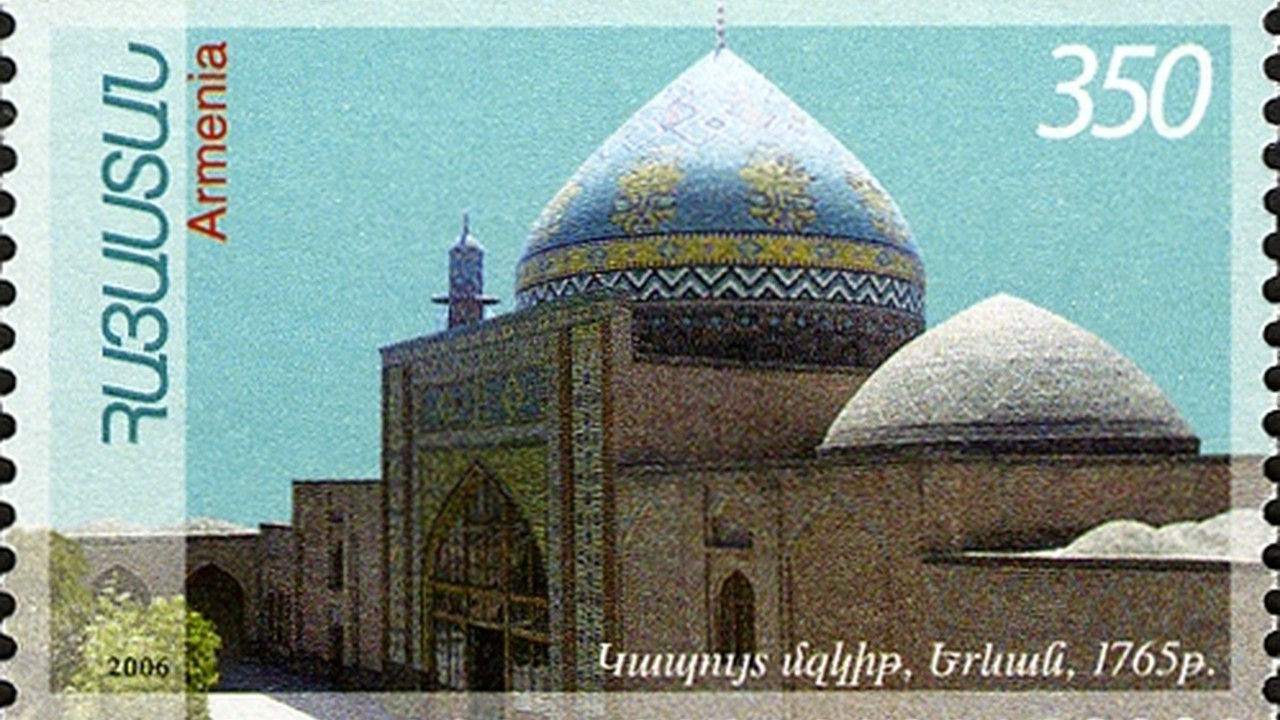
1765-1766
Еrivan Khanate ruler Huseyn Ali Khan, erected the town's largest mosque, Geok Jami (Blue Mosque). At the beginning of the 20th century, it was one of seven functioning mosques in Erivan. Restoration of the mosque in 1996-1999 was financed by Iran.
The entire complex covers an area of 7000 square meters, it includes a courtyard measuring 71 × 47 meters, a ritual building, a dome and a minaret, lined with decorative faience tiles decorated with majolica. The minaret in the southeastern part of the mosque, 24 meters high, is the only one surviving of the four originally existing minarets of the mosque (25 meters high), three were demolished after 1945. There are 28 pavilions, a library in the north, a main hall and dome in the south, and a courtyard.
During the Soviet years, the Blue Mosque was preserved during the reconstruction of the city, but turned, first, in 1931, into the Museum of the City of Yerevan, then into a planetarium, now it is one of the cultural centers of the Iranian community of Armenia.

