PLACES OF WORSHIP
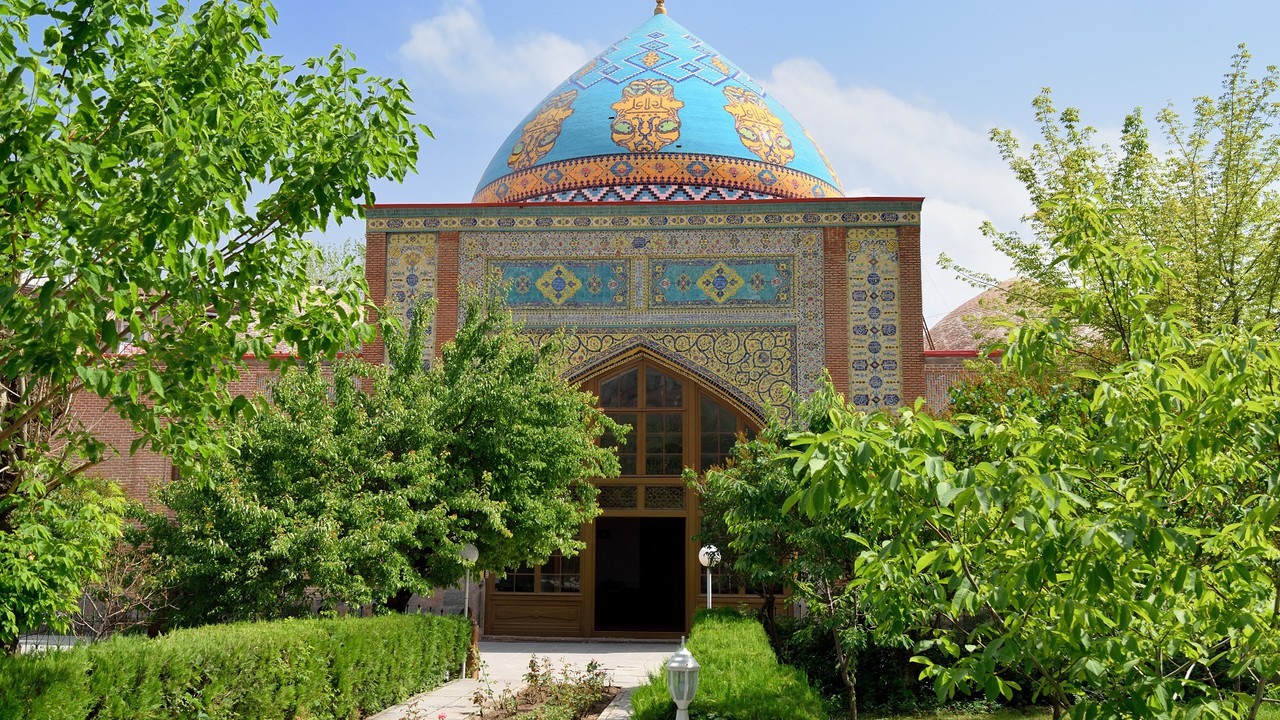
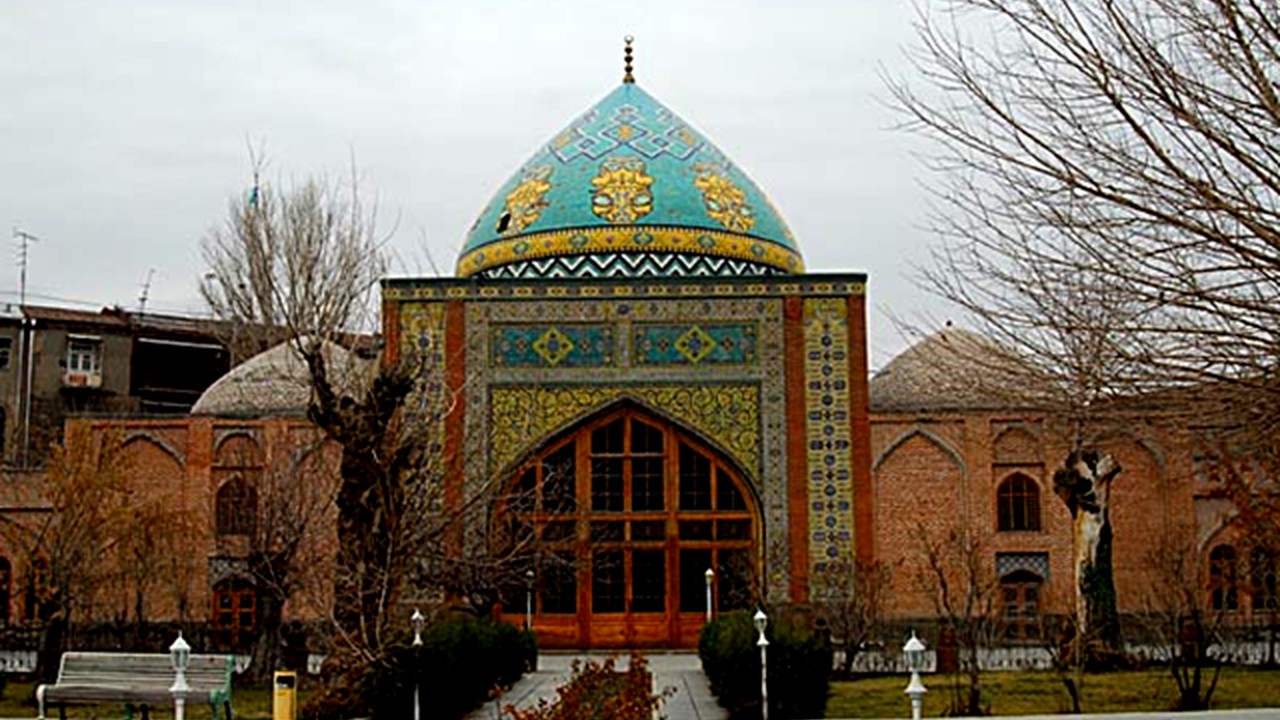
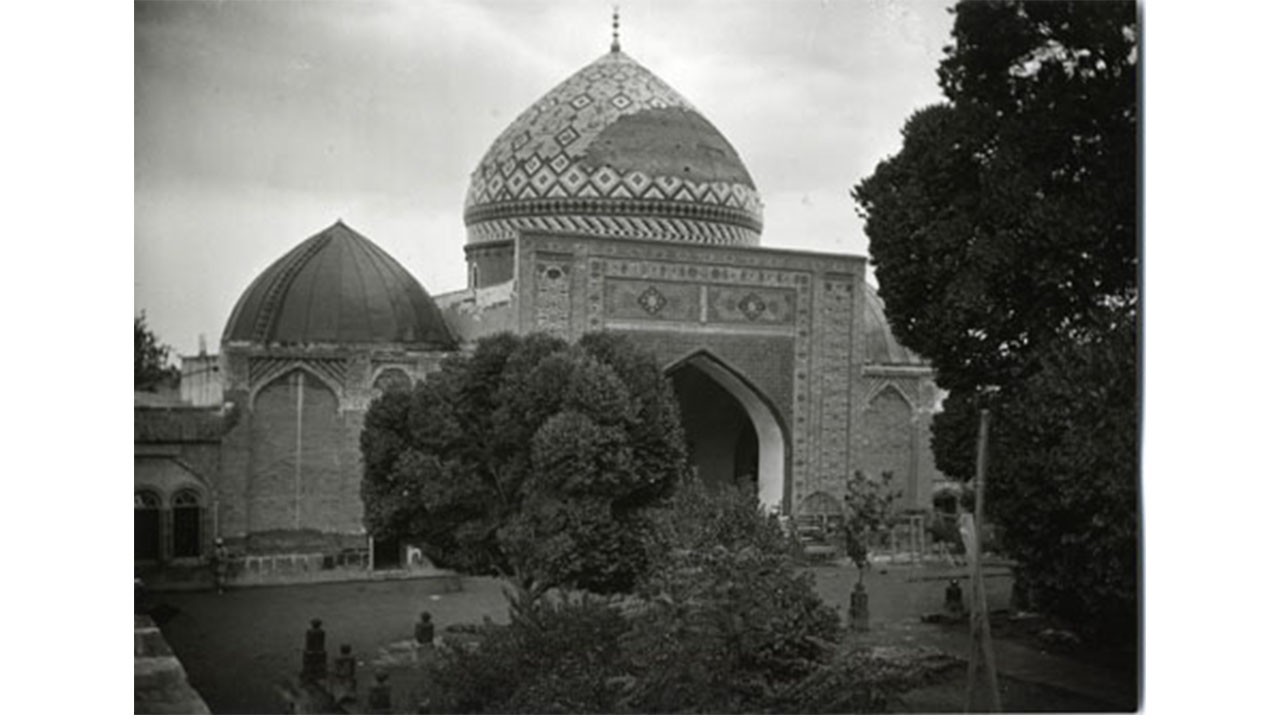
BLUE MOSQUE - GYOY MOSQUE, HUSEYN ALI KHAN MOSQUE, GOK JAMI
The Blue Mosque is the best Persian mosque in Transcaucasia. 1765-1766
The
Blue Mosque, according to the inscription on the facade of the southern gate,
was built by the Yerevan Sardar Hussein Ali Khan in 1766 (1179 AH). It was the
largest and most notable of the mosques in Yerevan, built in the architectural
style typical of Shia mosques. The site of the Blue Mosque was previously
occupied by the Def Sultan Mosque, which was destroyed in a devastating
earthquake in 1679.
The
Blue Mosque has been described by many, including Prussian ethnographer August
Hackshausen, the Italian traveler Luigi Villari, the Primate of the Yerevan
Diocese, Hovhannes Shahkhatunyants. The English traveler Henry Lynch, who was
in Armenia at the end of the 19th century, describes with admiration the
architecture of the monument, the oriental patterns placed near the frames with
colored glass, and also notes that the mosque had its own spiritual and
elementary school.
During
the Soviet era, during the mass demolition of religious buildings, the mosque
building was preserved and taken under state control through the efforts of the
great poet Yeghishe Charents and several other Armenian intellectuals. From
1937 to 1982, the Yerevan History and Natural History Museums operated here,
and the small hall of the mosque was later used as a planetarium. In 1937, a
door was installed between the two halls of the mosque (for the museum). In
1940 and 1972, renovation work was carried out. In 1991, after Armenia gained
independence, at the request of the Iranian government, the mosque was handed
over to the Embassy of the Republic of Iran as a place of prayer. In 1994-1998,
it was reconstructed with the funds of the Iranian side. In 2006, the
wide-sided dome was renovated. The mosque has become not only a place of prayer
for Shiites, but also a spiritual and cultural center, where events,
conferences, exhibitions, and courses are regularly held.
The
complex has a rectangular (97.2 x 66.5 m) plan, an inner courtyard measuring 71
x 47 m, around which the buildings are grouped. There are three entrances. The
southern and western gates are large, while the eastern gate is a small door
leading to the courtyard. The courtyard is paved with tuff, with a stone pool
with a fountain built in the center, surrounded by a wide and carefully paved
square covered with shady trees. In the southwestern corner of the complex is a
tall, circular minaret (20 m). In the northern and southern parts of the
complex are prayer halls, and in the eastern and western parts are study cells.
The cells are square, vaulted, with arched halls opening into the courtyard in
front. The buildings of the complex are entirely built of brick. The domes and
the minaret are adorned with glazed brick in blue, yellow, and green colors.