UNIQUE PLACES
CASCADE COMPLEX
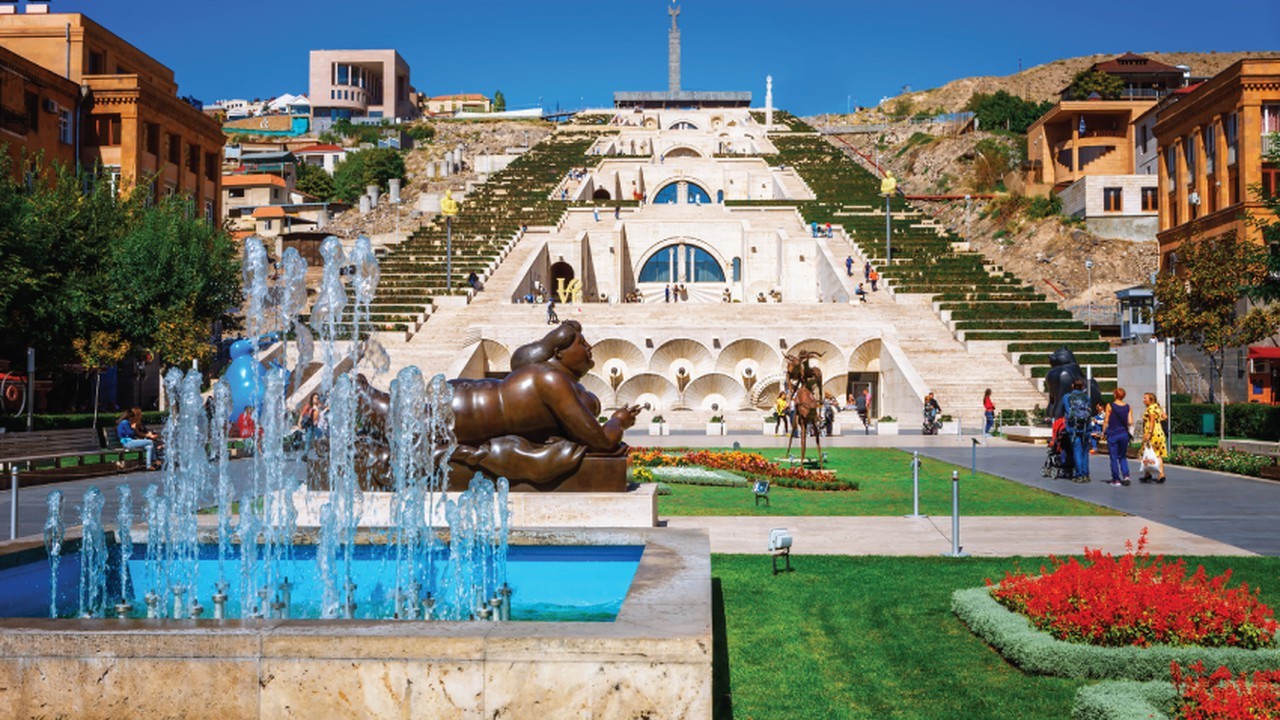
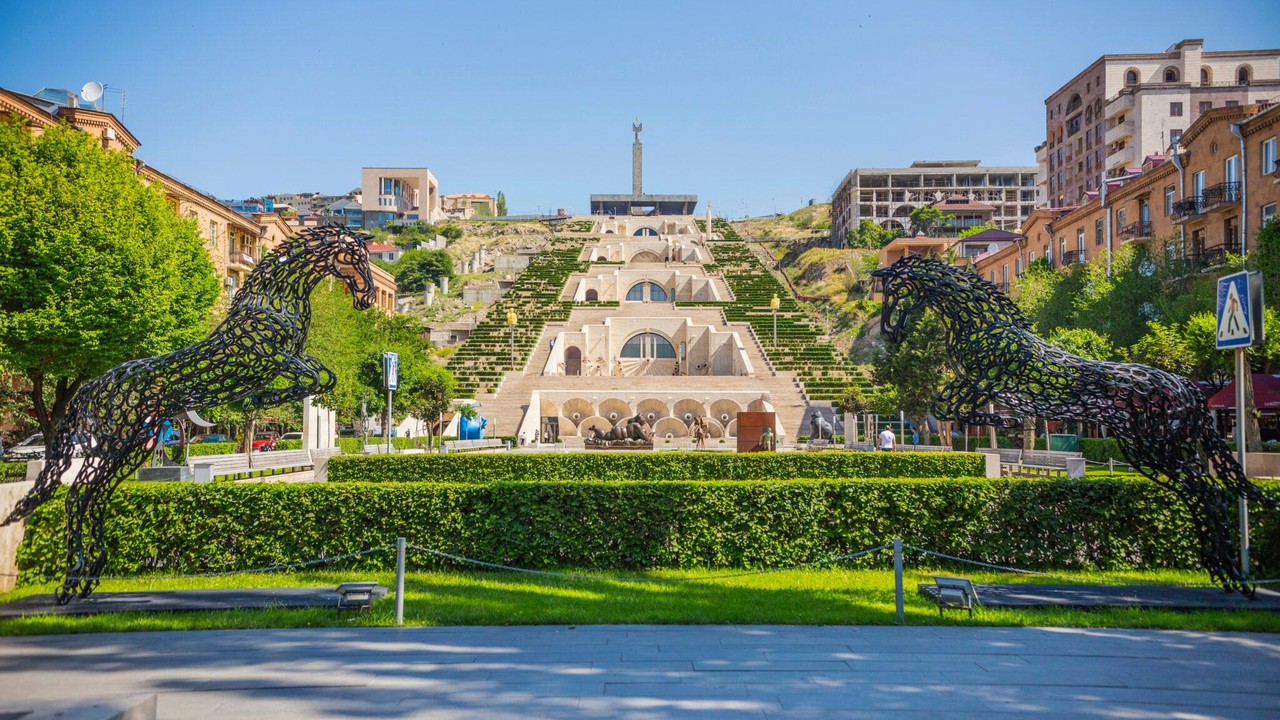
The Cascade is one of Yerevan’s most famous landmarks, where art, architecture, vibrant urban life, and green spaces beautifully blend together.
The Cascade Complex was included in the
master plan of Soviet Yerevan since 1924. Architect Alexander Tamanyan wanted
to connect the central and northern parts of Yerevan with the creation of the
Cascade. This project was brought to life in 1976 by the Chief Architect of
Yerevan, Jim Torosyan. Construction of the Cascade Complex was halted due to
the 1988 earthquake in Armenia and the collapse of the Soviet Union in 1991. In
2002, American-Armenian businessman and philanthropist Gerard Cafesjian initiated
the restoration of the Cascade. It was thoroughly renovated, turning it into an
art center.
The complex is known among Yerevan
residents as the Cascade, because in Soviet times the old cascade with a small
waterfall and a colorful mosaic of fish was located here.The Cascade starts from Moskovyan Street,
and the entrance is marked by a basalt statue of the famous architect Alexander
Tamanyan (sculptor Artashes Hovsepyan, 1974).
The Cascade complex was built of white
travertine stone. The main idea was to represent the national revival,
decorated with ornamental sculptures bearing motifs of Armenian history and
culture.
A 56-meter-high colonnade, built in 1971,
crowns the white steps of the Cascade. It was built in honor of the 50th
anniversary of Soviet power in Armenia and was called "Revived
Armenia". The monument is decorated with symbols of Urartian Armenia, and
at the bottom is the sun disk, which is the most important sign of ancient
Armenian iconography, a symbol of eternity.
The Cafesjian Sculpture Park in the
Cascade complex features works by a number of renowned artists. To the right of
the Tamanyan statue are several sculptures of faceless geometric human figures
by British artist Lynn Chadwick. Two of these figures are called “Stairs”
because they are on steps, and in front of them is another pair, “Seated
Figures.” Another of these statues, “The Observers,” can also be seen in the
park.
“Seated Tattoo,” a work by Jaume Plensa,
adorns the Cascade. All the rivers of the world are engraved on this sculpture.
In the park there is a group of bronze
sculptures of rabbits by Barry Flanagan: “Rabbit on a Bell”, “Boxer Rabbit on an Ankle”, “Acrobat Rabbits”, “Rabbits on Elephants”.
One of the most interesting sculptures is
“Roman Warrior” by the famous Latin American sculptor Fernando Botero, who is
depicted nude. Among the seductive works of this author you will also find “Smoking
Woman” and “Black Cat”.
During the walk you will also be greeted
by the trunk of an elephant looking out of a circus tent. This funny work is by
Jim Unsworthy.
The Museum of Russian Art is located in
the Cascade. This two-story building was previously a fashion house. Today,
works by the greatest masters of Russian painting are presented here, collected
and donated to his homeland by doctor-professor Aram Abrahamyan.
To reach the entrance to the Cafesjian
Art Center, you must pass by the sculpture “Leaping Deer” by Sarraj Gukh, then
by the “Black Cat” by Botero, and then by a small metal horse (author Martin
Lowe). The beautifully designed outdoor exhibition ends at the foot of the
complex and the travertine steps of the Cascade begin. The number of steps in
the complex is 572, the height from the base to the top is 302 meters, and the
width is 50 meters.
On each platform of the Cascade there are
fountain zones, sculptures of medieval sundials. The ornamental carvings are
Armenian, especially the national symbols of Van were used.
One of the unique features of the complex
is that no sculpture, ornament, or composition is repeated in any part. The
only thing that unites all of this is the national symbols: pomegranates,
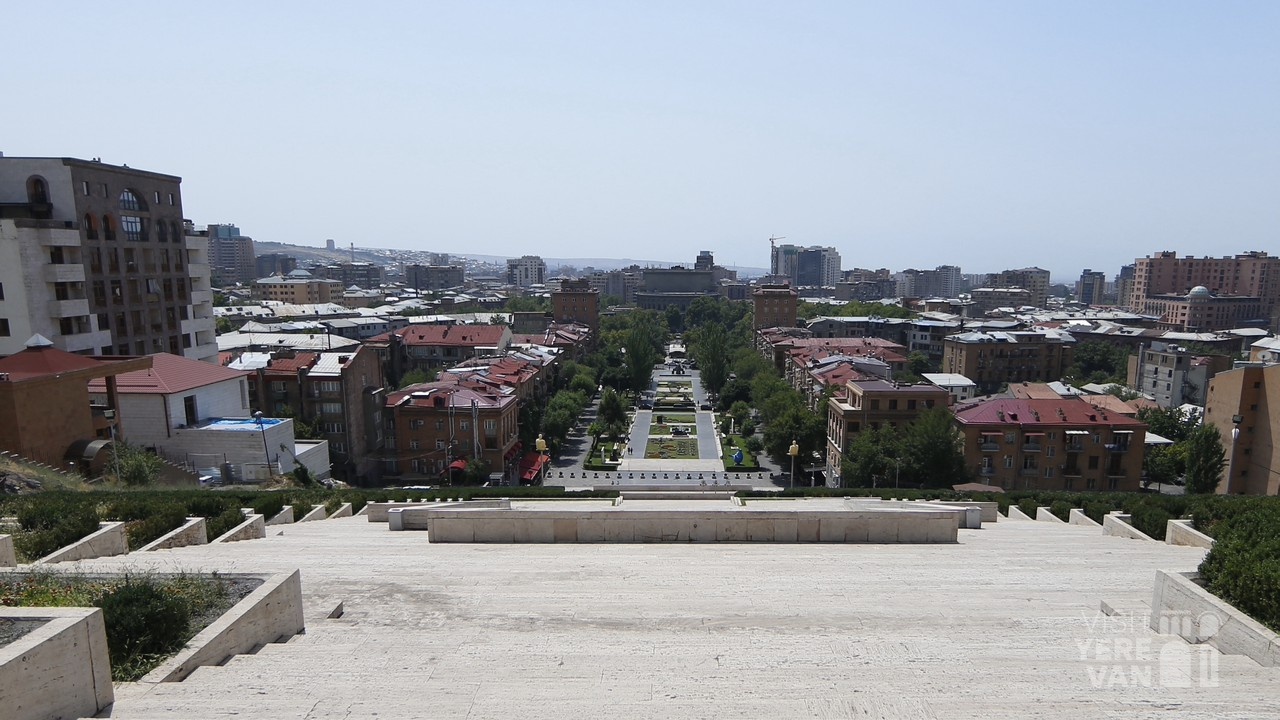
grapes, doves, the solar cross, a symbol of eternity, etc. The balconies of the
open platforms of the cascade allow you to enjoy the magnificent panorama of
the city with a view of the majestic Ararat.