MONUMENTS

KHACHATUR ABOVYAN MONUMENT
1913
The
bronze statue of Khachatur Abovyan, a famous Armenian writer, enlightener,
founder of new Armenian literature and pedagogy, is situated in the courtyard
of his house-museum on Kanaker 2nd Street, on a high, polished granite
pedestal.
The
writer is depicted standing, his right leg slightly forward, his arms crossed
on his chest. In his right hand is the book "Wounds of Armenia", the
cornerstone of new Armenian literature. His clothing is a light, high-collared
coat that falls below his knees. Abovyan, with his head uncovered, looks into
the distance with a gentle, thoughtful gaze.
The
pedestal is unadorned, and the inscription on the top is:
KHACHATUR
ABOVYAN
1804
- DISAPPEARED IN 1848.
The
height of the statue is 2.2 m, visible from all sides. The face is interpreted
according to the portrait by the famous Dorpat artist Friedrich Ludwig von
Meidel.
The
idea of creating a
statue of Khachatur Abovyan was conceived by the progressive Armenian public in
1908, on the occasion of the 60th anniversary of the writer's disappearance.
Prominent Armenian figures insisted that the statue of the great enlightener
should be erected not in a church or cemetery (as was customary before), but in
the very heart of Yerevan.
The
process of creating the statue encountered many obstacles. The tsarist
government did not allow the small nations of the empire, and especially the
Armenians, to erect monuments to their prominent figures in city squares and
other prominent places, as this could encourage their national liberation
hopes. But under pressure from Armenian public opinion, the Viceroyalty of the
Caucasus with great difficulty allowed the construction of the statue in
Yerevan, hoping that the initiative would not be realized due to the large
financial costs.
The organizational work was undertaken by the “Armenian Cultural Union” in
Baku, involving wide sections of society in the work. Writers Hovhannes
Tumanyan, Alexander Shirvanzade, artist Gevorg Bashinjaghyan and others in
their articles called on everyone to participate in this national initiative by
making donations. At the suggestion of Shirvanzade, the “Armenian Cultural
Union” decided at its meeting on September 14, 1908 to announce an award
ceremony and make a donation. This was published in Armenian and Russian
newspapers so that wide sections of society and sculptors wishing to
participate in the Transcaucasus and abroad would be informed about the
initiative.
The
creation of the statue required a large amount of money (according to
preliminary calculations, 12,000 rubles, then at least 18,000 rubles), but the
work was slow, and in two years a small amount (2,000 rubles) was collected. In
order to accelerate this important national initiative, in 1910 many
progressive figures (Tumanyan, Shirvanzadeh and others) again came out with
articles. In particular, Tumanyan published his famous article “All Together”
in the 266th issue of the “Horizon” newspaper in 1910, where he wrote: “It is
not a statue of a talented writer, it is not a statue of an individual, it is a
statue of the wounded heart of the Armenian people, which will stand there, in
the sacred field of Ararat, for generations and centuries to see, so that they
can see how many swords are stuck in it, how much pain and suffering. It must
stand forever, silently telling the world the suffering and longing of the
Armenians.” Tumanyan urges everyone to participate in this work, since the
statue of his worthy son must be erected by the entire nation.
To accelerate the fundraising, in 1910-1912, literary and artistic evenings,
concerts, and performances were organized in various cities of Transcaucasia,
Moscow, and St. Petersburg. Interest in Abovyan and his monument grew so much
that books and articles were published about them, and musical and artistic
works were created. The "Armenian Cultural Union" in Baku addressed
letters to 6 famous Armenian sculptors of the time, including Paris-based
Andreas Ter-Marukyan and Hakob Gyurjyan (the latter had just graduated from the
Paris Academy of Fine Arts), inviting them to also participate in the award
ceremony (both submitted 2 projects each to the "Armenian Cultural
Union" in 1910).
After
long discussions, the project of sculptor Andreas Ter-Marukyan was approved.
The sculptor worked on the statue and its sculpted pedestal in Paris from 1910
to 1913. In 1913, after completing the work, he cast them in bronze.
In 1911 and 1913, Ter-Marukyan came to Yerevan to collect additional
information about the writer and determine the location of the statue. After
conducting a site inspection with the city council architect, the place for the
monument was specified: it was to be erected in the city square, between the
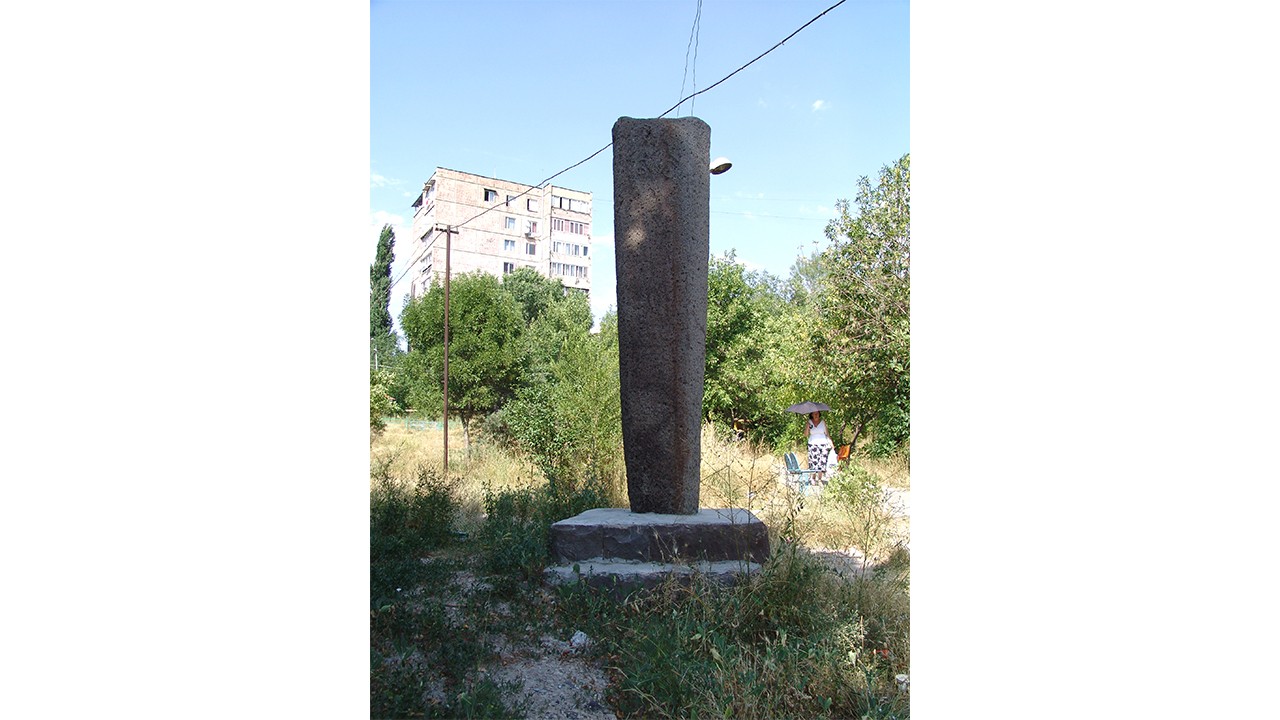
boulevard and the later V. Lenin statue.
Due
to the slow progress of the 5-year fundraising and the failure to raise the
necessary funds, the statue and the pedestal remained in the Paris foundry; the
manufacturer, who had not received the money, did not give them away. Moreover,
after waiting 4 years, in 1917. the manufacturer decided to cast and sell the
bronze at a higher price, especially since there was a great demand for metal
during the First World War. And only after the author's persistent requests and
persistent efforts was it preserved.
However, until his death (March 1919) the famous sculptor did not see the
installation of the statue he had created in Yerevan and did not receive the
intended amount.
In
the early 1920s, the newly formed government of the Armenian SSR transferred
the necessary amount to Paris and purchased the statue and pedestal of Abovyan,
as well as a number of other works by Ter-Marukyan (the bust of Ghevond Alishan
and high reliefs), which were sent from Paris to Yerevan on February 27, 1925.
However, the cargo did not reach its destination. Ashot Patmagryan, an
eyewitness and participant of the events, who lived in Paris, appealed to
Sargis Lukashin (Srapionyan), the deputy of the Council of People's Commissars
of the Transcaucasian Federation, who had moved from Yerevan to Tbilisi for
work, asking him to take measures to find the statue and send it to Yerevan. It
turns out that the Batumi customs officers opened the box and, thinking that it
was a statue of an unknown European revolutionary donated to Georgia, placed it
in the main square of the city. Lukashin ordered the statue to be urgently
transported to Armenia, but for unknown reasons it did not reach Yerevan until
1933.
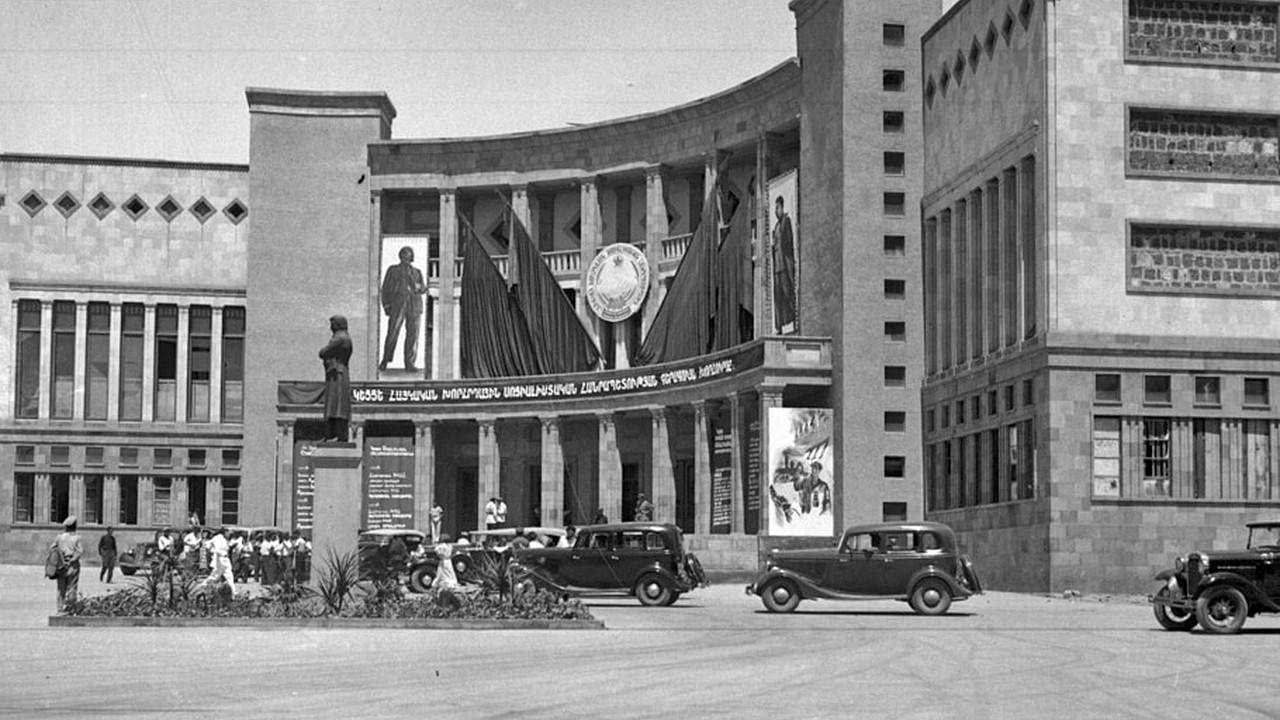
On
July 6, 1933, Kh. The statue of Abovyan was finally erected in Yerevan, but not
in the designated place, but on Abovyan Street, in a small square near the
Moscow Cinema (now Charles Aznavour Square), on a newly built, four-seater,
high and unadorned pedestal (the location of the pedestal built by Ter-Marukyan
is still unknown). In 1950, under the pretext of the reconstruction of Abovyan
Street, the statue was moved to a desolate place near the Circus, in front of
the former railway station. In 1953, it was installed on the Tsitsernakaberd
hill, away from people's eyes, and in 1957, in the Hrazdan Valley, near the
Children's Park.
Yerkreerkir,
after wandering from place to place, the work of the famous sculptor was
finally completed in 1964. On September 10, 1980, on the eve of events
dedicated to Estonian literature and art in Armenia, he found his last resting
place in Kanaker, in the courtyard of the great writer's house-museum, where he
stands to this day.
In
the late 1980s, unknown individuals desecrated the statue, shooting it in the
head and shoulders.
Kh.
Abovyan's statue is one of the earliest and most successful sculptures created
in memory of the great Armenian enlightener. It is also one of the few
preserved works of A. Ter-Marukyan, a masterpiece of his work, the first
classic example of monumental-statue sculpture in Armenian reality. It marked
the beginning of Armenian monumental sculpture.