YEREVAN

Yerevan
is the capital of the Republic of Armenia, one of the oldest cities in the
world, founded in 782 BC. It is 29 years older than Rome, but at the same time
a young and modern city, full of vitality and energy.
On
May 28, 1918, as a result of the victorious heroic battles of Sardarapat,
Bash-Aparan and Karakilisa, after more than 400 years of history as an
administrative and political center, Yerevan became the capital of the newly
independent First Republic of Armenia. Very soon, Yerevan marked its
independence with rapid development, construction, population growth rates and
cultural revival. New streets and avenues, buildings and squares are being
built. Yerevan's population is also growing as a result of the influx of
Armenian immigrants. Over the past 100 years, Yerevan's population has
increased almost ten times and today exceeds one million.
Although
the current appearance of Yerevan was formed in the mid-20th century, during
the Soviet period, the city has an Armenian character and spirit. In the
conditions of the so-called “universal Soviet style” spread throughout the
USSR, Armenian architects managed to revive the traditions of Armenian medieval
architecture, giving the facades of buildings a special and original style.
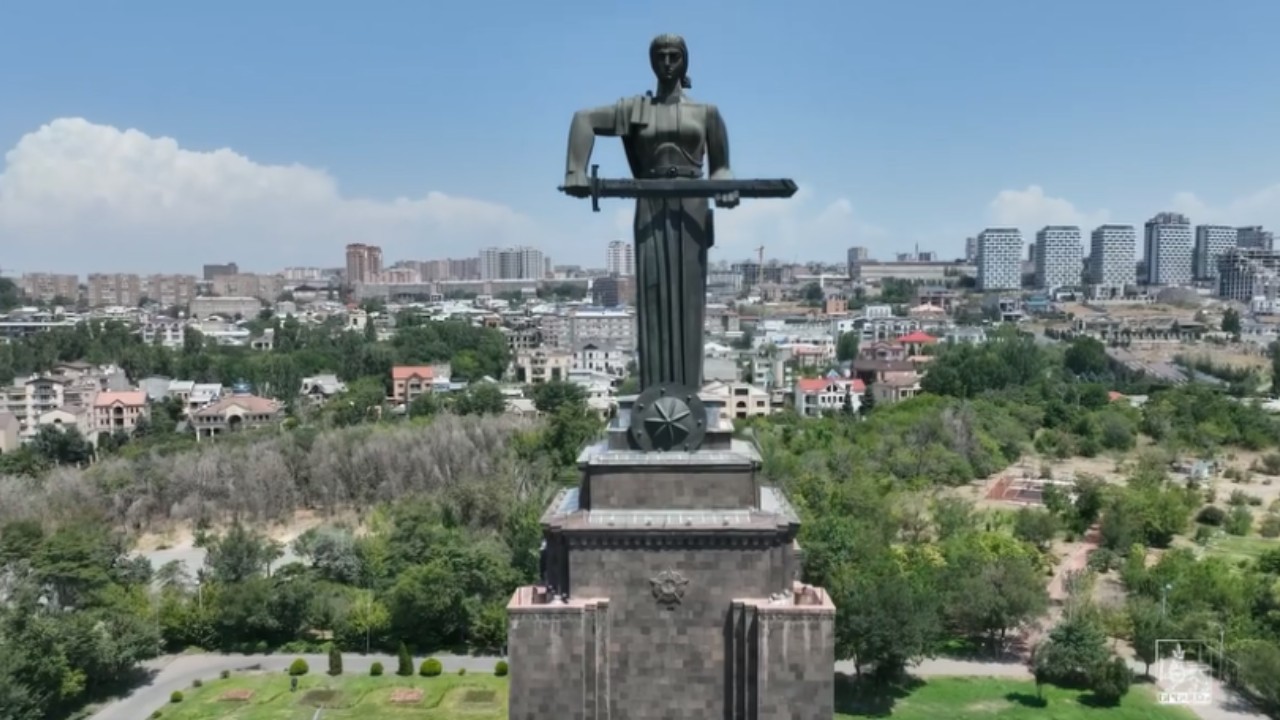
Thanks to the work of brilliant masters, even the sculptures commemorating
important Soviet events had a national character.
In
1920-1921, great work was done to put industrial enterprises into operation,
end hunger and epidemics, establish schools, regulate the water supply system,
and build streets and squares. At the invitation of the republic's leadership,
architect Alexander Tamanyan, painter Martiros Saryan, composer Alexander
Spendiaryan, poetess Shushanik Kurghinyan, and numerous Armenian intellectuals
moved to Armenia and settled in Yerevan.
The
author of the master plan of Yerevan is Alexander Tamanyan, a renowned Armenian
architect of the 20th century, the founder of new Armenian architecture. His
works boldly embody exceptional talent, impeccable taste and aesthetics,
thoughtful vision, boundless hard work, patriotism and devotion to his people.
In
1921, the "Ararat" trust was organized, uniting wine and brandy
production enterprises. Theaters, a film studio, and a university were opened
in Yerevan. Artists founded groups and unions. In 1921, the State Gallery of
Armenia was founded, the major fine arts museum in Armenia and the largest in
the world with its Armenian art collection. In 1926–1927, a number of factories
and workshops were put into operation. In 1932, the State Academic Theater of
Opera and Ballet was opened. Since 1933, polytechnic, theater, conservatory,
pedagogical, and other institutes have been operating.
In
1945-1959, the building of the Matenadaran, a scientific research center for
ancient manuscripts, was built, which had exceptional significance in terms of
preserving Armenian culture and the rich manuscript heritage during the Soviet
period. Erebuni Historical and Archaeological Reserve-Museum, founded on the
territory of the Erebuni Fortress, built in 782 B.C., became not only a
scientific but also an international center of importance and an important
tourist destination.
In
1991, after the collapse of the Soviet Union, Yerevan became the capital of the
independent Third Republic of Armenia. After the independence, Yerevan entered
a new stage of development, forming a modern city that still retains its
national character.
Today,
Yerevan is a developing city where ancient history merges with modern
architecture, innovative cultural life, and convenient tourist infrastructure.
It is the political, cultural, scientific, and economic center of Armenia, with
a population of over one million.
Yerevan
has its own geographical features. The city offers a magnificent view of Mount
Ararat, which is central to the image and symbol of Yerevan.
Yerevan
is a safe and comfortable city where you can get a variety of experiences. The
city is rich in cultural heritage and historical monuments, centers of
contemporary art and is constantly alive with cultural vitality: summer
open-air concerts, theater festivals, wine and food events, exhibitions.
Yerevan
is a “walking” city. The city center unites the main museums, parks, cafes and
cultural centers. Walking here in the evening becomes a special experience,
full of music, colors and hospitable people.
Yerevan
is a unique combination of old and new, where each visitor finds his own
history and takes with him the warm and unique breath of the city.
GENERAL INFORMATION
The territory of Yerevan is 233 km², the population is 1 106 300 thousand people.