PLACES OF WORSHIP
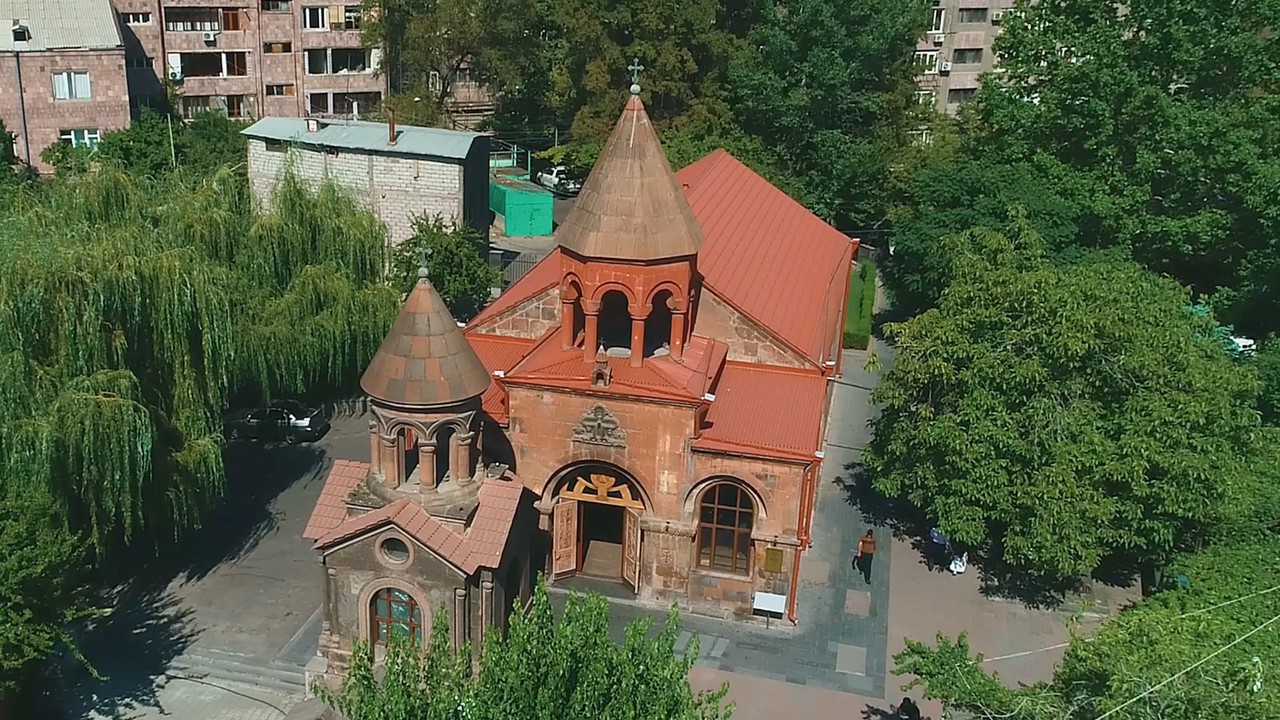
ZORAVOR HOLY MOTHER OF GOD CHURCH COMPLEX
Zoravor Holy Mother of God Church got its name from the miraculous "Zoravor" (Mighty) Gospel kept here. 17th-19th centuries
State index: 1․6․72
On the site of Zoravor Holy Mother of God
Church there was once a small chapel built over the tomb of the Apostle
Ananias, which was located outside the borders of ancient Yerevan, on the
northern side. In the first quarter of the 17th century, Archpriest Movses
(later Movses III of Tateva, Catholicos of All Armenians, 1629-1632) founded a
monastery around that chapel with the funds of the residents and merchants of
Yerevan, built a wooden, walled complex consisting of a prayer house, a
prelate's office, and monks' cells, and founded a monastic school, which was
one of the spiritual and scientific centers of the time. In 1635-1636, during
the Turkish-Persian war, all the buildings of the monastery, except for the
chapel, were destroyed. In 1637, Catholicos of All Armenians Philip I
Aghbaketsi (1632-1655) rebuilt the monastery in stone, but in 1679 it was
destroyed again by the devastating earthquake. The currently standing,
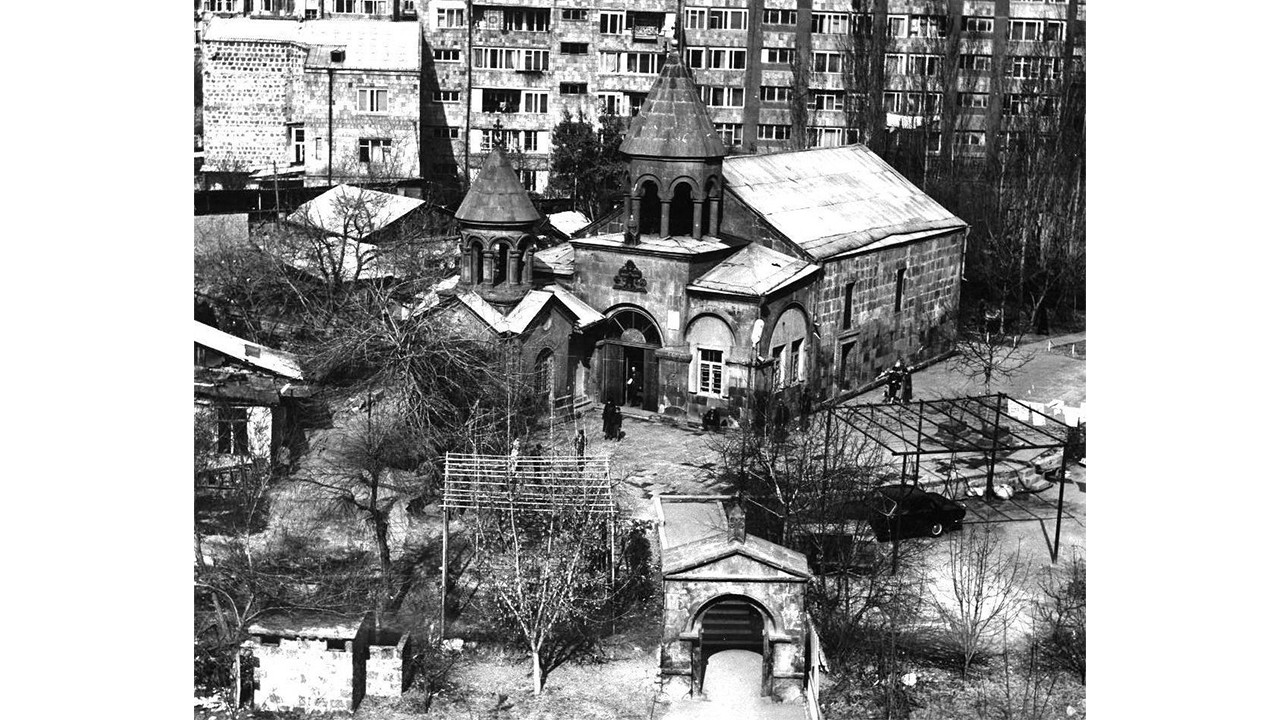
three-nave basilica Holy Mother of God Church Church with one pair of gables, and the three-arched
hole vestibule-hall attached to the western facade were built in 1693
with the donation of the wealthy Yerevan resident Khoja Panos. From inside the
church, from the side of the northern pier, an entrance was opened to the tomb
of St. Ananias. In 1889, the tomb was separated from the church, the entrance
was closed from the inside, and the current eight-column, domed chapel was
built on top of it, separate from the church. Here is the tombstone of the
apostle Ananias.
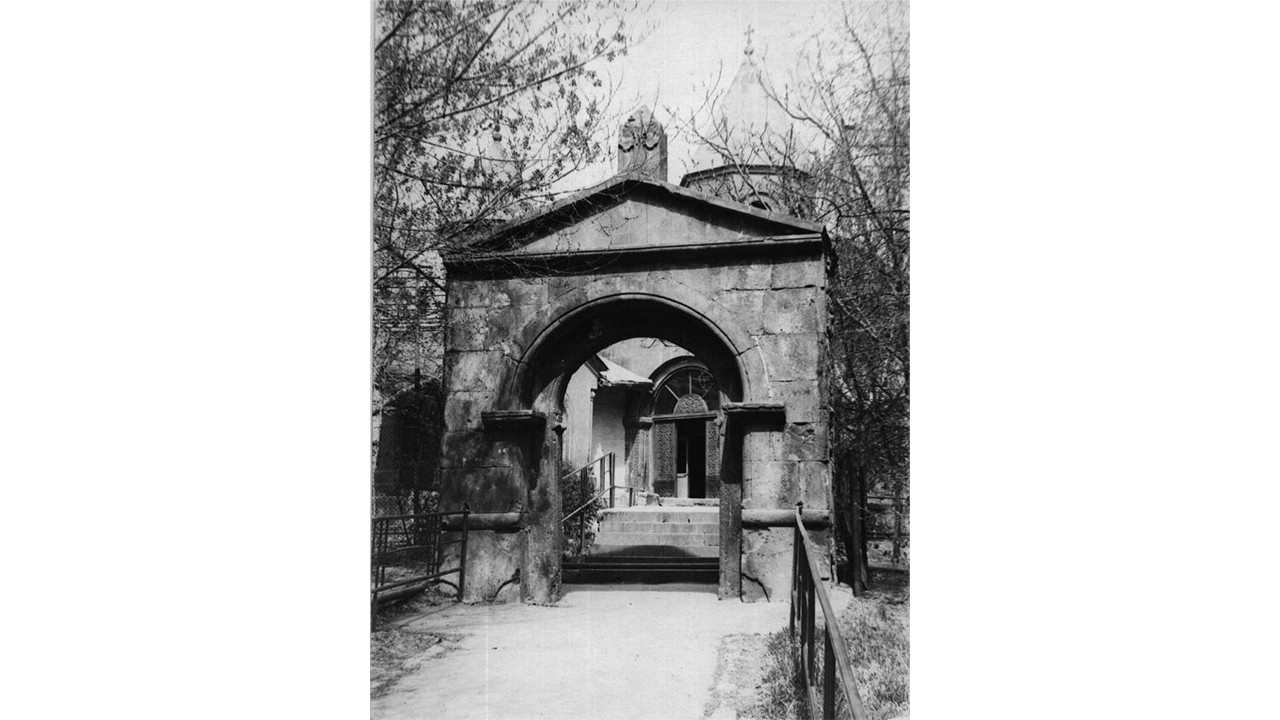
The gate is southwest of the church (the
17th-19th century wall has not been preserved). Several tombstones from the
cemetery around the church have been preserved on the southern side of the
area, dating back to 1811, 1891
and 1918. On the eastern facade of the church are installed cross-stones
dedicated to members of the family of Khoja Panos. There are also inscribed
cross-stones on the western wall, in the vestibule, one of which is the
cross-stone made by Master Hovhannes (15th century).
In 1781, the leader of the Ananias
Apostle Desert, Avetis Vardapet, erected a stone cross-stone in the church's
sanctuary. In 1793, the roof of the church was renovated by Gabriel Centurion,
who was from the Geghamyan dynasty, known in Yerevan in the 18th century.
The monastery building functioned until
1835, after which it was transformed into a parish church. The church was named
Zoravor Holy Mother of God after the "Zoravor" (Mighty) Gospel, which
is kept here and is considered miraculous.
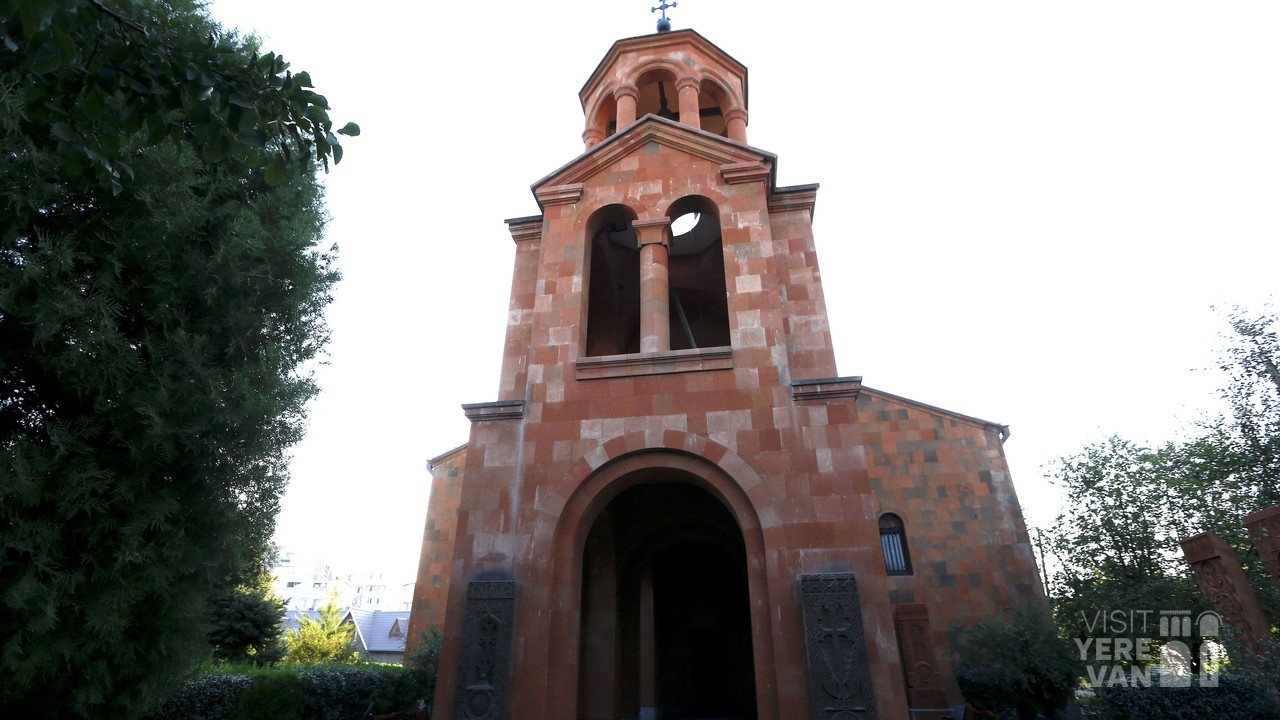
In 1978-1980, some renovations were
carried out: the arches of the vestibule were closed with windows, the central
arch was turned into the main entrance, and an attic was added to the western
part of the hall.