MONUMENTS
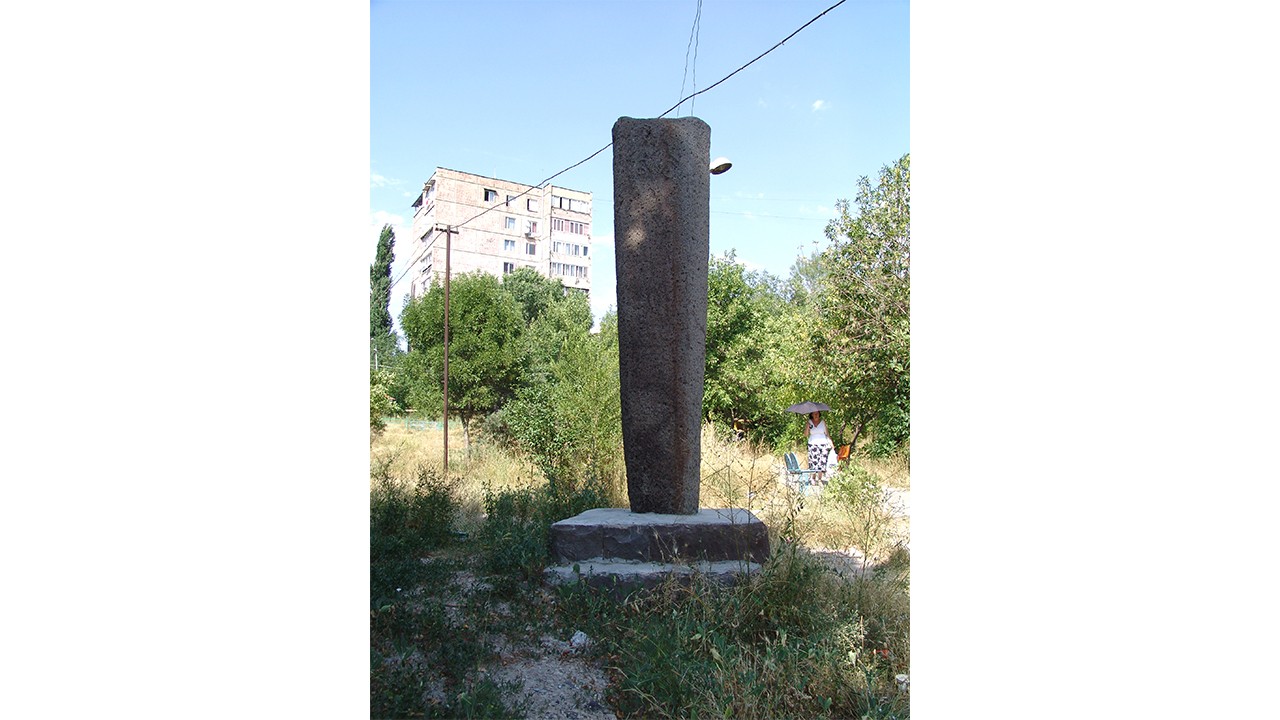
DRAGON STONE
Second half of the II millennium BC
State index: 1.8.18
The
dragon stone is located in the 2nd district of Nor Nork, in a park stretching along the
edge of Gay Avenue. It is placed on a two-tiered pedestal with a rectangular
base. In 1909, it was discovered by Russian scientist Yakov Smirnov in the
Geghama Mountains, near Lake Vank (Tokhmakhan Gyol). It was moved to Yerevan in
1976. It is a quadrangular monument widening upwards with a high relief of a
sacrificed bull. It is made of gray basalt. It is 3.5 m long.
The
dragon stones are exceptional and valuable stone monuments of ancient
culture, characteristic only of the Armenian Highlands. They were placed near
the sources of natural and artificial water bodies and springs and symbolized
the power of the elements, the awakening of nature, fertility, and abundance.
These monuments were called dragons
because of their size, as a result of which the sculptures and images on them
were interpreted as images of snakes and dragons.
The stone monuments called dragons are
exceptional and valuable monuments of ancient culture, characteristic only of
the natives of the Armenian Highlands, and have no parallels outside its
borders.