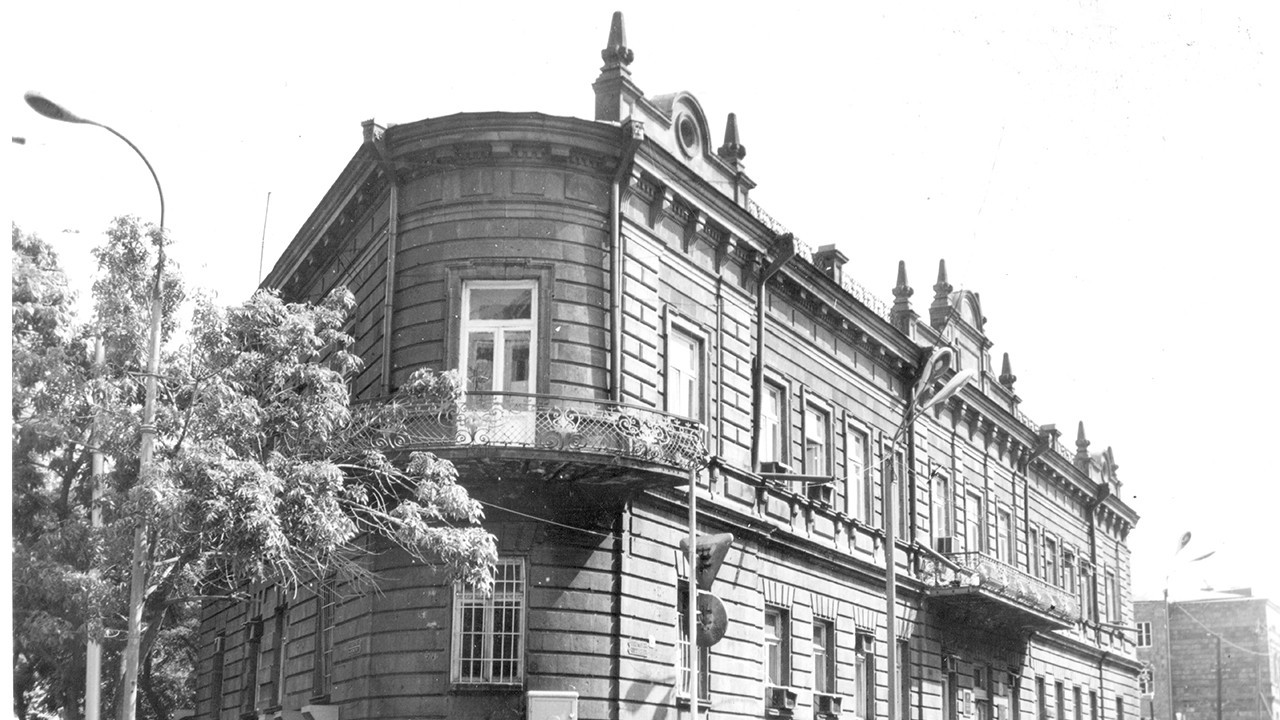
HISTORICAL BUILDINGS

HYDROELECTRIC POWER PLANT — YEREVAN’S FIRST HPP
1926
It is located in the Hrazdan
Gorge, on the left bank of the river. It is one of the first energy facilities
in the USSR. Construction began in 1923. The HPP building was designed to
accommodate four turbines. The turbines were supplied by the German company
“Fritz Beimeyer.” Water was supplied to the turbines via the Shahumyan Canal
(since 1923, this was the new name of the Urartian Mamr canal). For this
purpose, restoration works were carried out on the water conduit: certain
sections were restored and deepened, and water barriers were constructed.
The Yerevan HPP was built
between 1923 and 1925. The plant’s capacity was 5,600 horsepower (4,650 kW),
exceeding the capacity of all HPPs operating in the city at that time.
The official commissioning of
the HPP took place on May 16, 1926, with the participation of Sergo
Ordzhonikidze, First Secretary of the Transcaucasian Regional Committee of the
CPSU (Bolsheviks). For his significant contribution to this project, as well as
to the creation of the republic’s energy system, Alexander Tamanyan was awarded
the title of People’s Architect of the Armenian SSR in 1926.
In the early 1940s, while
preserving its architectural design, the HPP building was expanded. Since 1962,
it has been removed from the national energy system and assigned to
institutions for other purposes. In the same year, a new building of the
Yerevan HPP was constructed not far from it. In 1967, a Research Institute of
Hydropower Engineering was opened in the old building.
The first Yerevan HPP is built
of roughly hewn basalt, in the traditions of national architecture. With its
laconic architectural forms, the color of the building material, and its rough
finish, it harmonizes with the landscape of the gorge. The structure is one of
Tamanyan’s first attempts to apply motifs of Armenian national architecture and
give them a modern expression.