HISTORICAL BUILDINGS
DALMA GARDENS
7th century BC, 19th–20th centuries AD
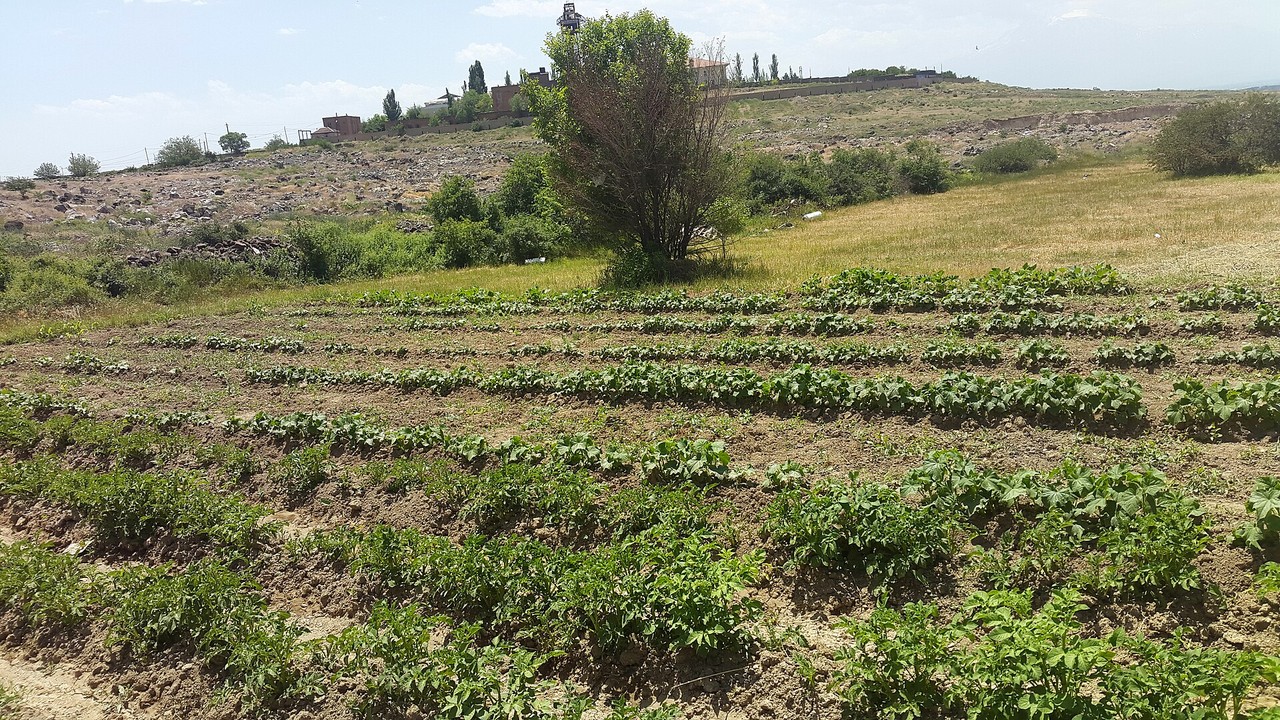
The Dalma Gardens
are located in the western part of Yerevan, on the right bank of the Hrazdan
River.
Among
the fruit orchards of Yerevan, Dalma is the oldest. According to a cuneiform
inscription discovered in Zvartnots, the gardens were established during the
reign of Rusa II, ruler of the Kingdom of Van (685–645 BC). The Dalma
irrigation canal, built in the 8th century BC, supplied water to the gardens
near the ancient city of Teishebaini (Karmir Blur), including Dalma.
The
name “Dalma” originated in the 19th century from the Persian word “deolme,”
meaning dug out, excavated, or underground.
In
the Middle Ages, the Dalma canal ceased to function, and the gardens were
abandoned. In 1815, Hussein Quli Khan, the last Persian sardar of Yerevan,
restored the canal and integrated it into the general irrigation system. At
that time, new gardens were established, viticulture and winemaking developed,
and numerous wine presses and cellars were built. The sardar’s pavilion, once
one of Yerevan’s landmarks, was also located here.
Information
about Dalma is provided by Ghևond Alishan, Yervand Shahaziz, as well as
European travelers such as Frédéric Dubois de Montpéreux, Joseph Pitton de
Tournefort, and Russian imperial official Ivan Chopin, among others.
About
half of the Dalma gardens were occupied by various fruit trees, while the other
half consisted of wide avenues lined with poplar trees on both sides. On the
slopes, around 80 varieties of grapes were cultivated, along with dozens of
varieties of mulberry, apricot, and apple.
In
ancient times, Dalma covered a vast area, stretching from the Tsitsernakaberd
hill to Zvartnots. In the 19th century, it covered 790 hectares, of which 533
hectares were orchards. Until the 2000s, it occupied about 530 hectares, and
currently about 290 hectares remain preserved.
The
Dalma Gardens are a nearly 2,700-year-old archaeological complex rich in
biodiversity and historical-cultural layers. They are of great interest for
studying not only Yerevan and Armenia’s viticulture and winemaking culture but
also the architecture of production facilities such as wine presses and
cellars. One of its valuable features is the traditional mound-based
viticulture, which has preserved local grape varieties.
It
is known that during certain seasons—from spring to late autumn—people also
lived in Dalma, as evidenced by the remains of residential structures adjacent
to economic buildings.
Since
1931, the Dalma Gardens belonged to the collective farm of the Shahumyan
district. After Armenia’s independence in the 1990s, local authorities leased
the gardens to individual land users. Until 2000, they were included in the
State List of Natural Monuments of Armenia, with a protected area of 790
hectares.