HISTORICAL BUILDINGS
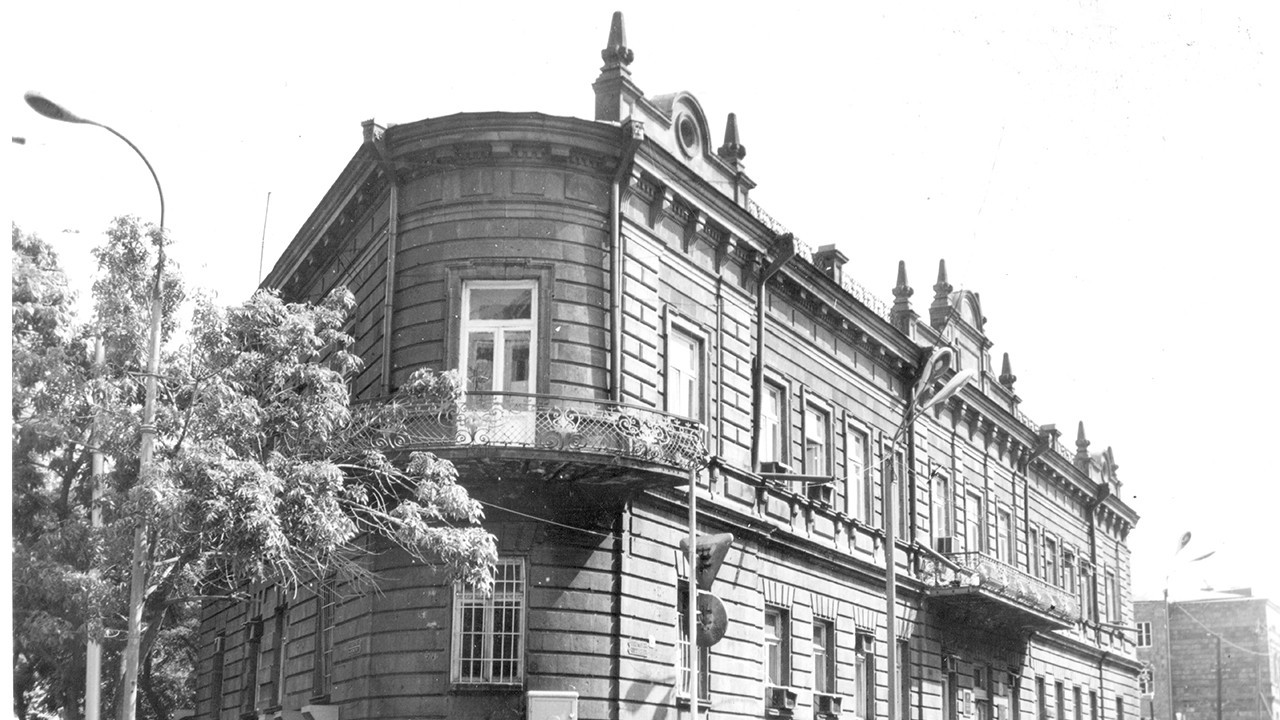
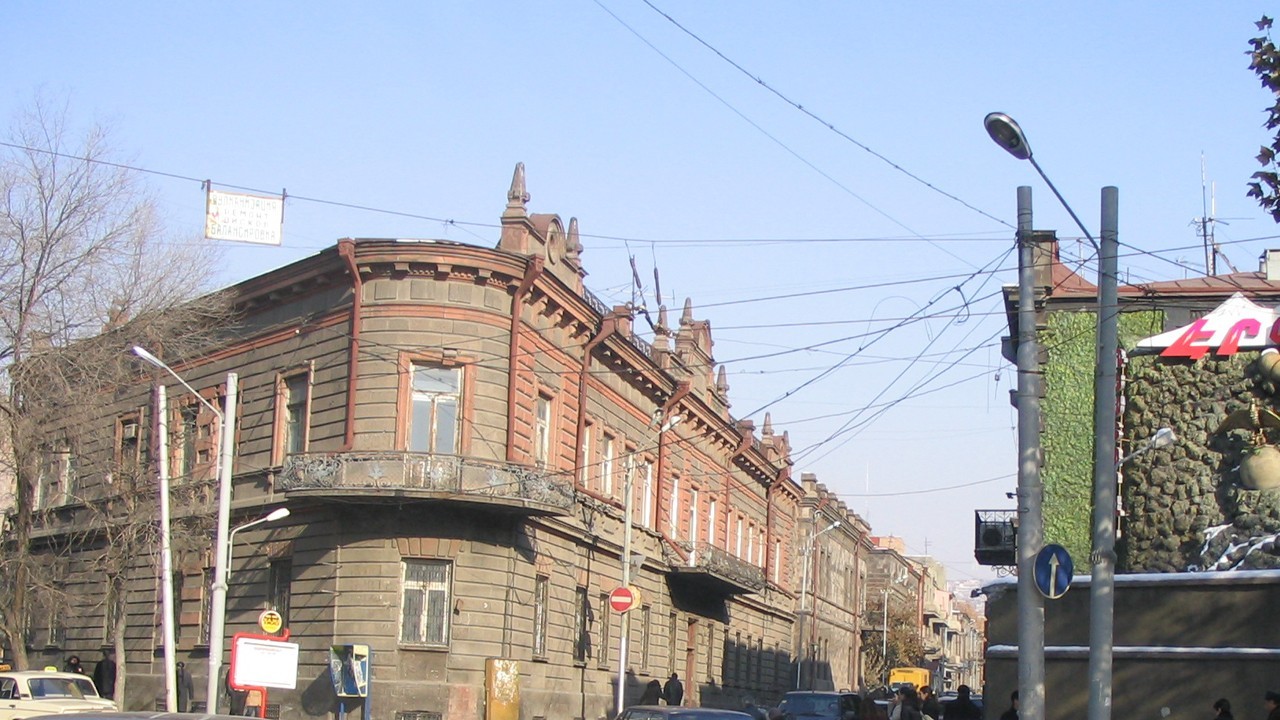
OFFICE AND HOUSE OF THE YEREVAN GOVERNOR
1905-1910
The
building is located at the intersection of Republic Street, Melik-Adamyan
Street, and Tigran Mets Avenue.
From
1905, the Governor of Yerevan (1896–1916), Count Vladimir Tiesenhausen, lived
and worked in this house with his family. The governor’s office and the nearby
governor’s building gave the street its name “Gubernskaya” (Governor’s Street).
From
1918 to 1920, the government of the First Republic of Armenia operated in this
building.
After
the Battle of Sardarapat (1918), from the semicircular balcony on the second
floor of this building, Aram Manukyan, the founder of the First Republic of
Armenia, proclaimed Armenia’s independence and raised the Armenian tricolor
flag.
After
the establishment of Soviet rule in Armenia, the building housed the Armenian
Revolutionary Committee and the Council of People’s Commissars.
From
1965 to 1998, the building housed the Committee for Cultural Relations with the
Armenian Diaspora of the Armenian SSR, the editorial office of its newspaper
“Voice of the Homeland”, and other state institutions.
In
1987–1988, while preserving the overall architectural style, a new annex was
added from the north side on Melik-Adamyan Street, with the aim of recreating
an urban environment characteristic of old Yerevan in the triangle formed by
Alaverdyan and Melik-Adamyan streets.
The
governor’s house is a two-story building with a basement. Its plan is
determined by the terrain, due to which the southeastern and western walls form
an acute angle (rounded in plan), and the six western rooms are trapezoidal.
The
first floor was intended for the governor’s office. In the central part of the
building, along its transverse axis, there is an entrance hall and a staircase.
The volumetric-spatial composition artistically emphasizes the southeastern and
western façades. The transition is symmetrical, with a semicircular, metal,
openwork cantilever balcony. All openings are rectangular.
The
masonry uses stones of different colors: against the main dark background of
the walls, pink tuff highlights divisions, projections, and horizontal bands,
as well as decorative elements. The walls are decorated with molded ornaments,
and the wall stoves are faced with colored mosaic tiles in the form of rosettes
and flowers.
Load-bearing
walls are made of stone with lime mortar. Street-facing façades are clad in
tuff stone. Interior walls use straw with clay mortar. The ceilings are wooden
and flat, while the basement vaults are stone.
Between
2006 and 2010, the interior volumes of the building were completely demolished
and reconstructed, and additional floors were added. Only the external walls
were preserved. Today, the building also functions as a business center housing
various organizations.