HISTORICAL BUILDINGS
ARARAT WINE INDUSTRY COMPLEX
1887
The
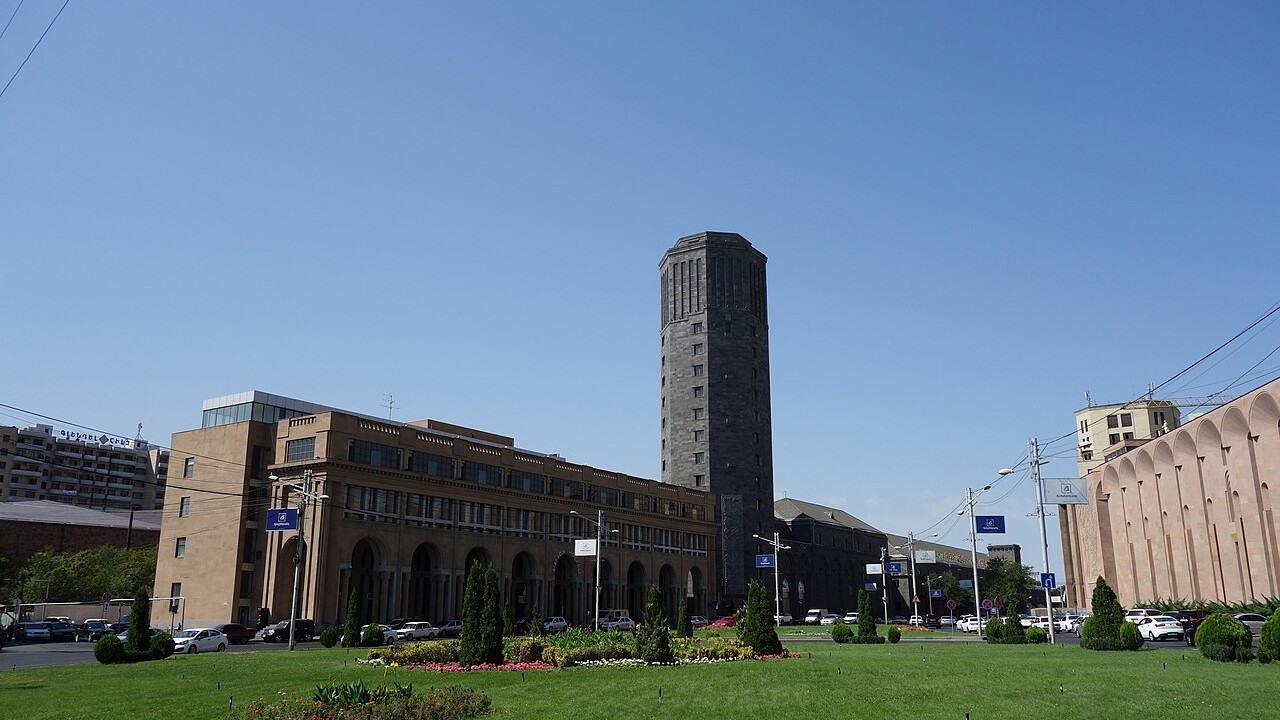
complex is located on the elevated left bank of the Hrazdan River gorge, on the
territory of the former Yerevan Fortress, on Argishti Street.
In
1877, the well-known merchant and philanthropist Nerses Tairyan began wine
production on a land plot purchased within the territory of the Yerevan
Fortress, and from 1887 onward also initiated brandy production, which quickly
became a leading enterprise in the field. In 1887, Tairyan received financial
support for the construction of the factory building from his relative, the
world-famous marine painter Hovhannes Aivazovsky.
In
1899, Tairyan leased the factory to one of the major Russian
commercial-industrial companies, “Nikolay Shustov and Sons,” which purchased
the factory a year later and expanded it into a large production complex.
Between
1887 and 1910, the Tairyan–Shustov wine-making complex was constructed
(architect: Mikhail von der Nonne).
The
oldest surviving structure on the factory grounds is the cellar (1877).
The
main products were wine, vodka, and brandy, exported to Moscow, Saint
Petersburg, Warsaw, Persia, Japan, and European countries, where they gained
wide recognition. At the beginning of the 20th century, the company was granted
the privilege of supplying brandy to the court of Tsar Nicholas II. By the late
1910s, Shustov’s enterprise accounted for 90 percent of the total wine, brandy,
and vodka production in the Yerevan Governorate.
By
1912, the complex, together with the buildings of the Tairyan period, included
more than twenty structures. Outside the factory grounds operated a
hydroelectric power station that supplied electricity to both the factory and
part of the city.
In
1920, the complex was nationalized, and in May 1921 it was renamed the Yerevan
“Ararat” Wine-Brandy-Vodka Combine (“Ararat Trust”), which united all wine and
brandy factories of Soviet Armenia.
In
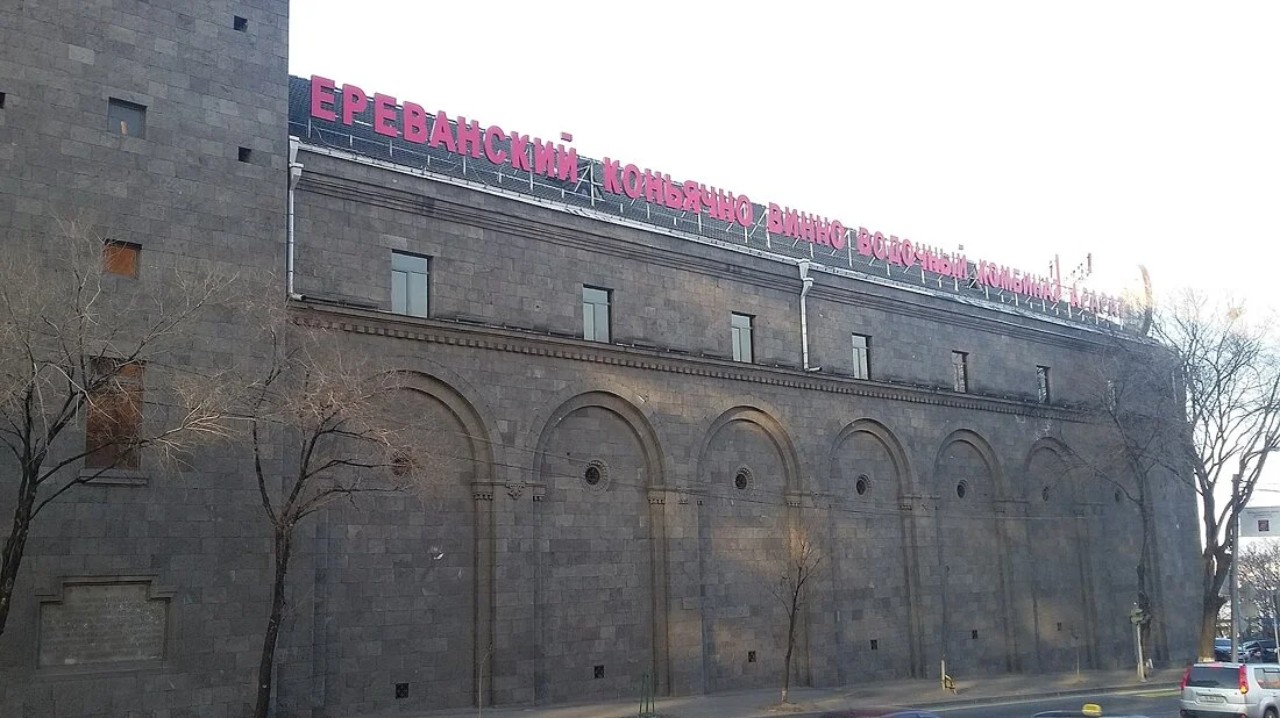
the 1930s, construction of the cellar building began on the site of the
Sardar’s Palace. The construction was carried out in two phases: in 1937
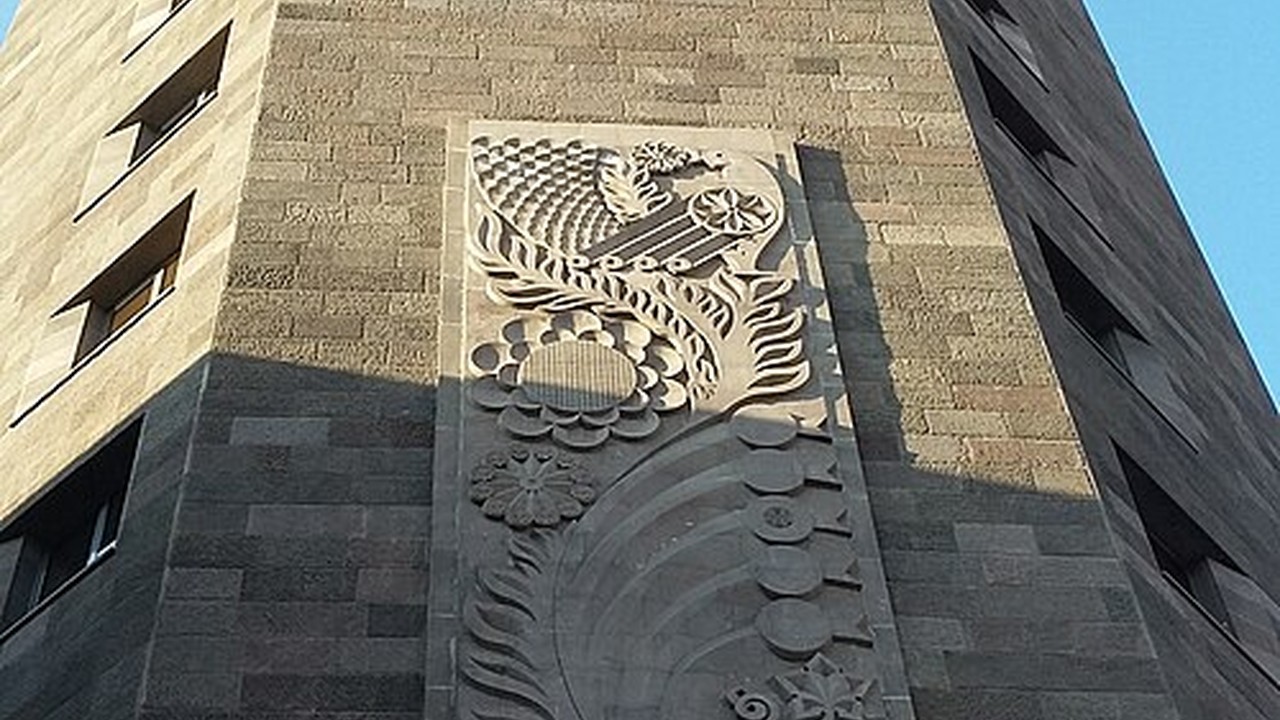
(architects: Rafael Israelyan and Gevorg Kochar) and in 1961 (architect: Rafael
Israelyan; sculptor: Ara Harutyunyan). With its flat roofs, the building
resembled fortress walls rising above the cliffs of the Hrazdan gorge,
symbolizing the historical presence of the Yerevan Fortress on this site.
As
a result of the 1948 reorganization, in 1953 the Yerevan Wine Combine and the
Yerevan Brandy Factory were separated, and in the same year the construction of
the new brandy factory building was completed.
Reconstruction
works were also carried out in the complex in 1980.
National
themes dominate the sculptural decorations of the wine combine, mainly
depicting scenes from Armenian fables.
The
complex stands out for its impressive architectural solutions and high
historical and cultural value.