HISTORICAL BUILDINGS
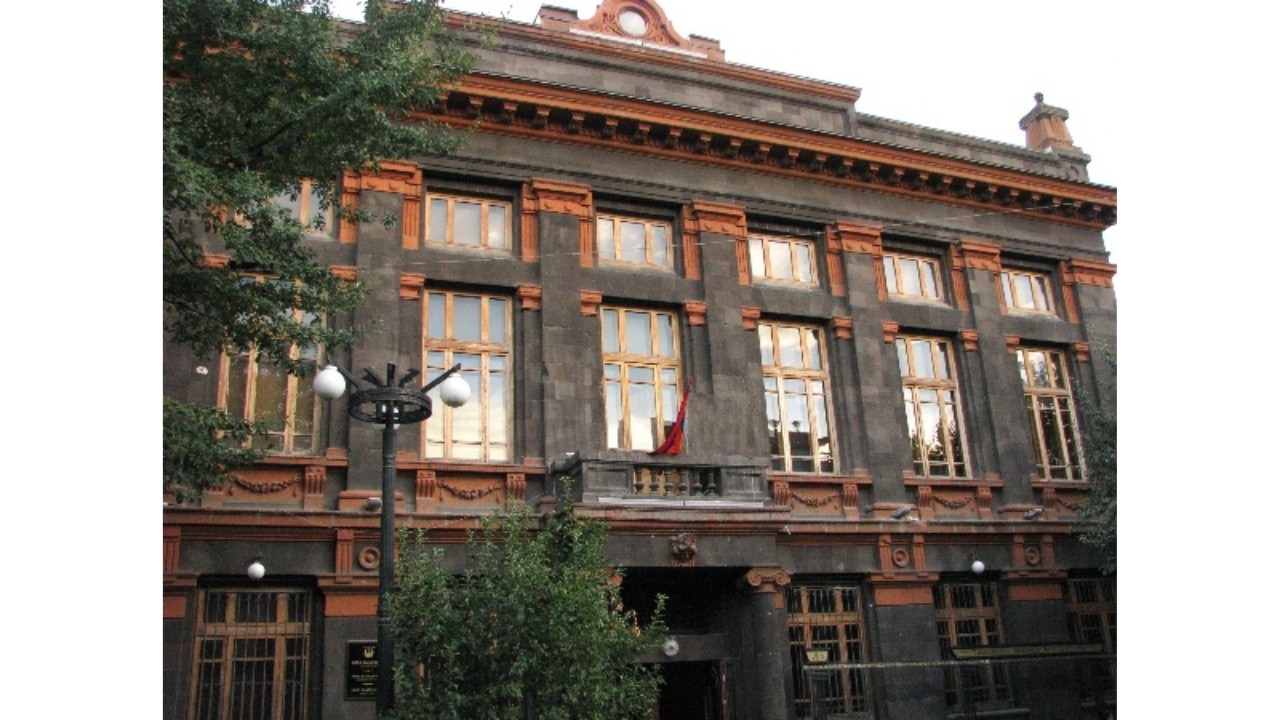
Formerly: HOUSE OF CULTURE. BUILDING OF THE MALE GYMNASIUM (SMALL HALL OF ARMENIAN CONCERT HALL) AND MUSEUMS
Since 1920, the building has been used
for various purposes. The Central Pedagogical Museum, the Yerevan House of
Culture (1921), the State History Museum of Armenia, the State Public Library,
the Technical Faculty of the State University, the Armenian Writers' House, etc.
operated here. The auditorium of the gymnasium in 1932 became the Armenian
Philharmonic Hall (from 1956 - the Small Hall, from 1976 - the Small Hall of
the Armenian Concert). The remains of the Great Komitas, brought to the
homeland in 1936, were laid here for farewell. Since 2003, the hall has been
named after the famous Armenian composer Arno Babajanyan. The museum building
unites the National Gallery of Armenia, the History Museum of Armenia, and the
Yeghishe Charents Literature and Art Museum.
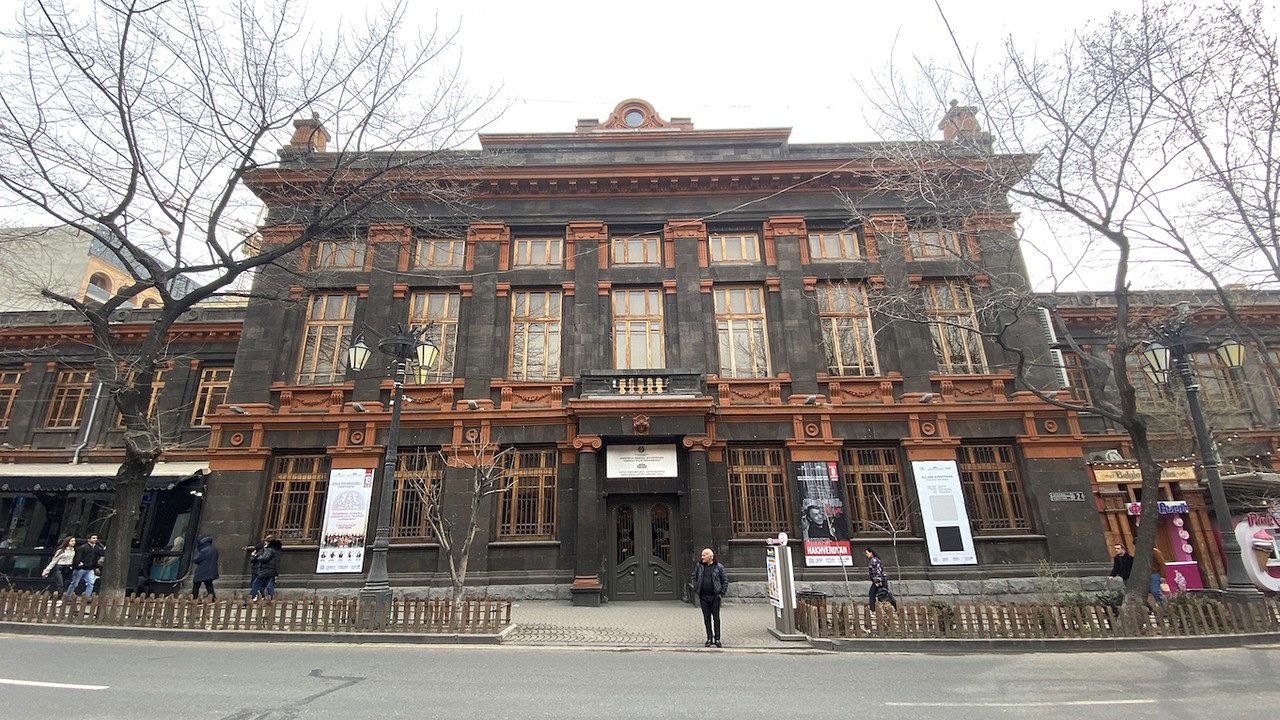
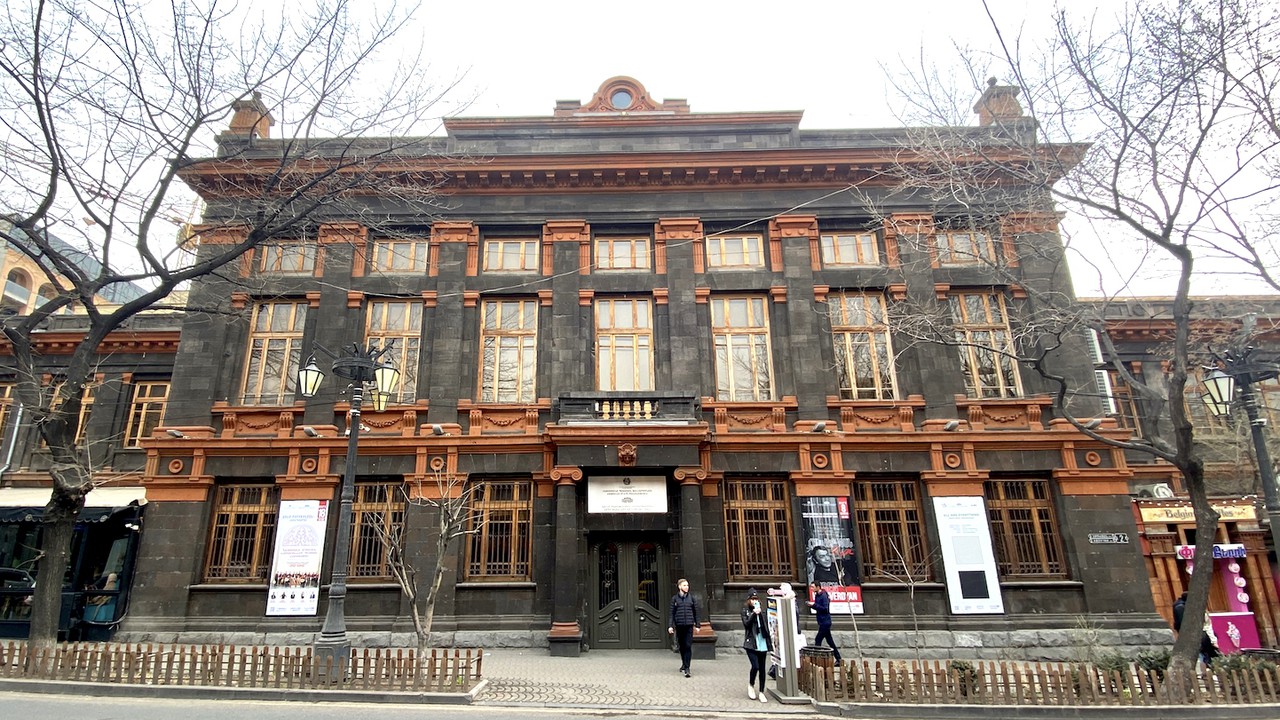
The gymnasium building is a two-story,
П-shaped structure built around an inner courtyard. Classrooms line the
corridors in the wings facing Aram and Buzand streets. The residential areas,
including student dormitories and administration apartments, occupied the end
sections of both wings. The main façade facing Abovyan Street features a
prominent central section (now the “Arno Babajanyan” concert hall) with a
grand entrance adorned with large Ionic columns. A high cornice with dentils
crowns the building. It measures 21 x 26 meters and combines black and red
polished tuff. The architecture blends classical style with Armenian national
building traditions and Art Nouveau elements.
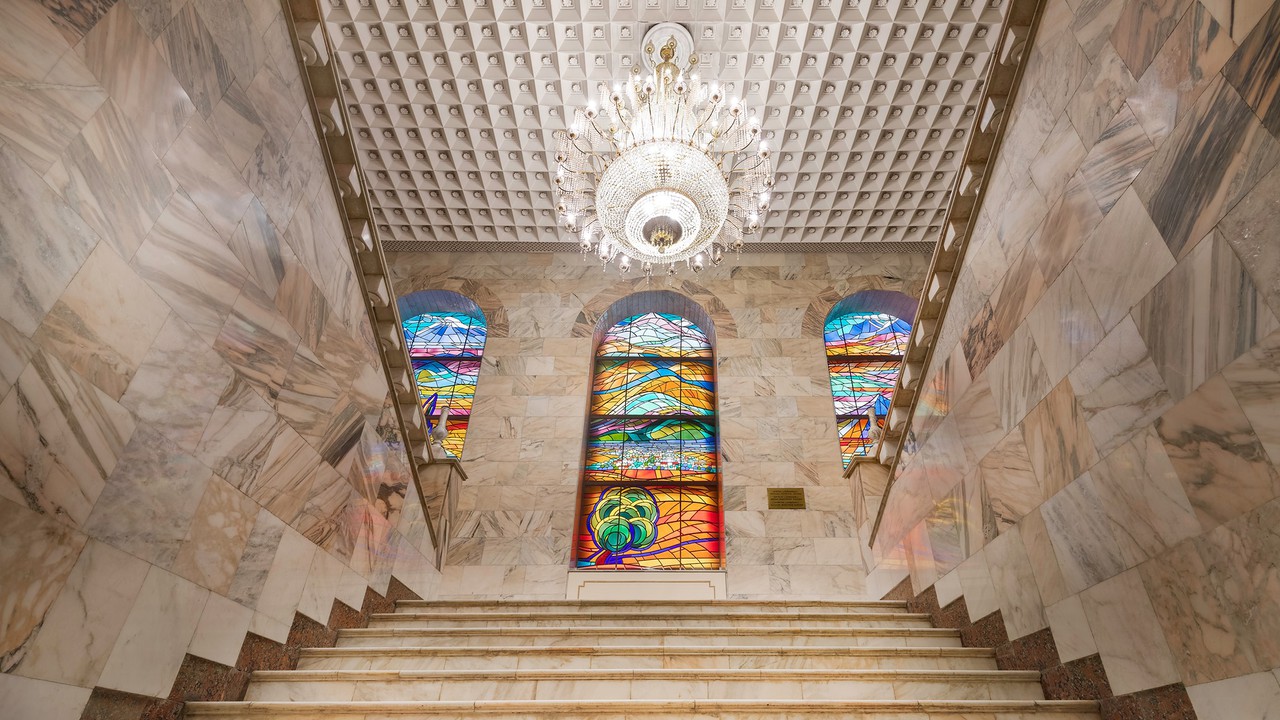
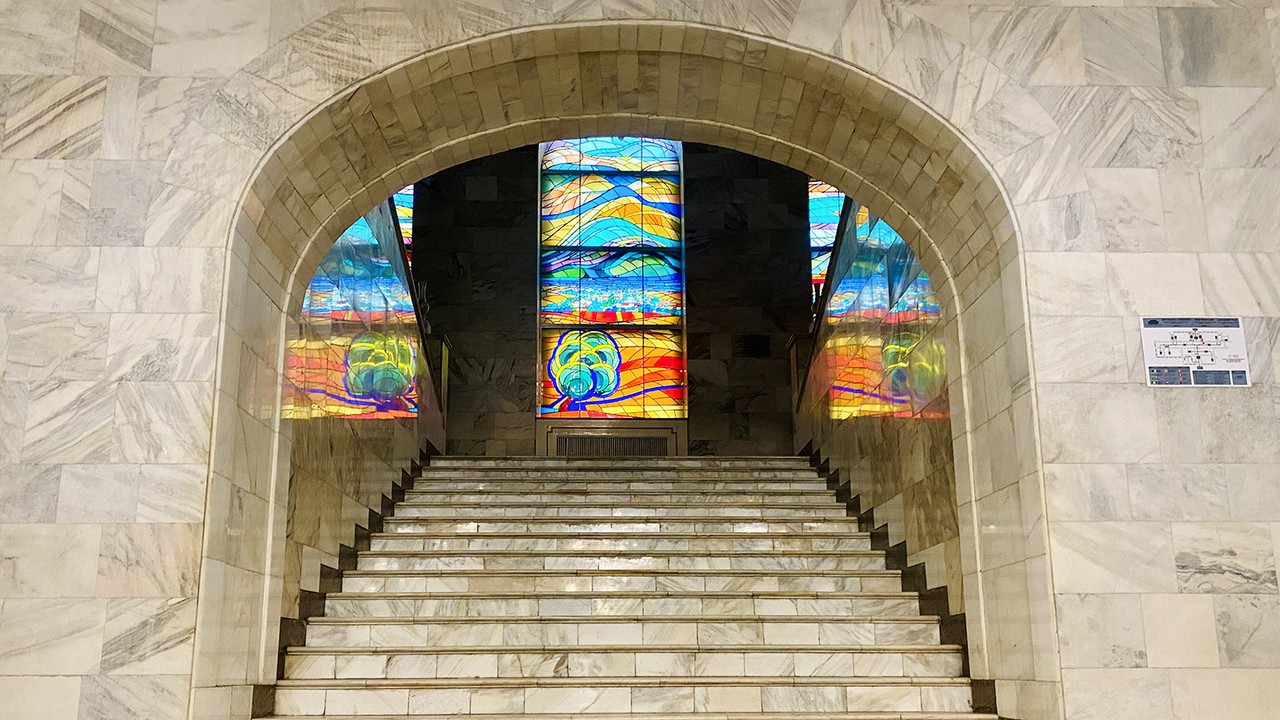
Three large windows in the foyer of the “Arno Babajanyan” concert hall feature
the “Armenia” stained glass (1966, artists Martiros Saryan, Henrik Siravyan). It depicts
motifs of Mount Ararat, plains, mountains, trees, and city, creating a unified,
symbolic image of Armenia in Saryan's incomparable vibrant colors.
The male gymnasium building underwent
changes during the construction of Republic Square and the House of Culture. In
1954, Eduard Sarapyan and Mark Grigoryan designed the Museum building. They
preserved the gymnasium's interior space and the façade facing Abovyan Street
while adding a third floor. In the inner courtyard, they built the seven-story
National Gallery of Armenia, which
has the form of an octagonal drum (architects: Mark Grigoryan, Eduard
Sarapyan). Architect Ashot Ghazaryan and builders V. Ghulyan and Gurgen
Kanetsyan also contributed to the gallery's construction. The gallery's
completion in 1980 finalized the main square's formation.
In front of the Museum building, in the
square's table-like section, Mark Grigoryan and Eduard Sarapyan designed a
fountain pool in 1953.