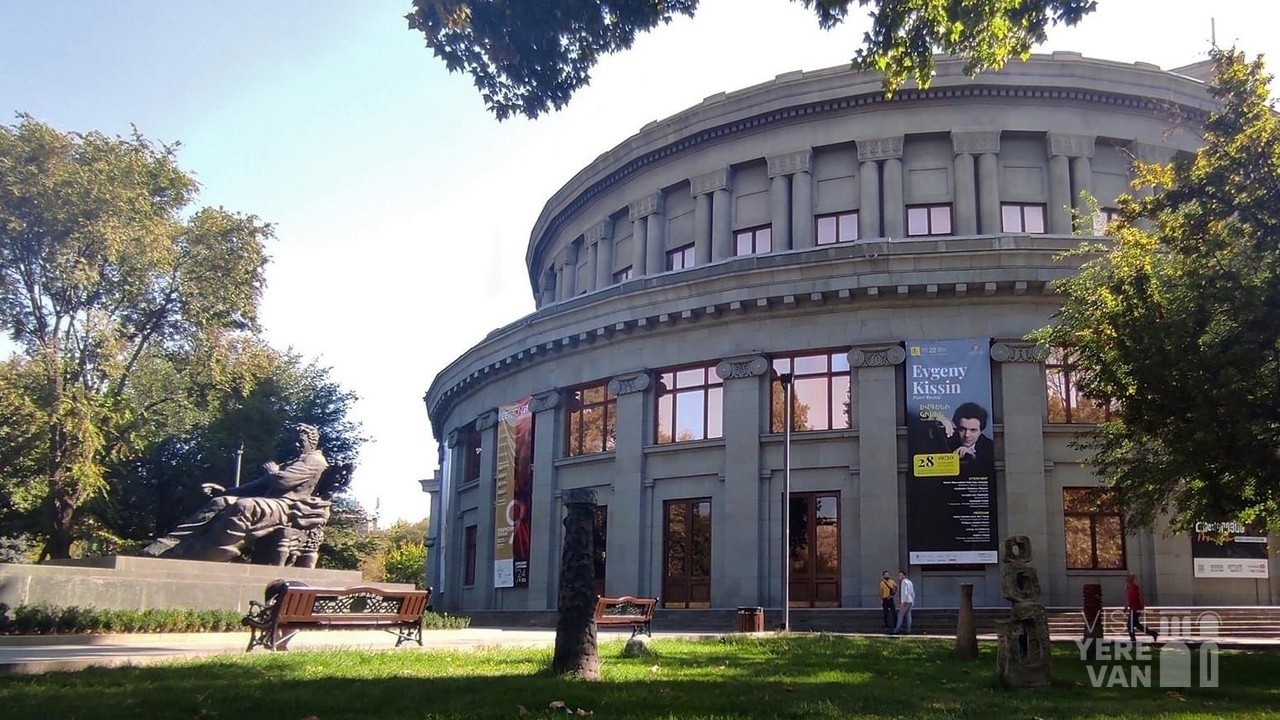
HISTORICAL BUILDINGS
UMESHINI CANAL – ETCHMIADZIN CHANNEL, KARMIR BLUR CANAL
7th century BC
The
canal was constructed by Rusa II, ruler of the Kingdom of Van (Urartu) (685–645
BC). It is mentioned in a cuneiform inscription discovered during the 1900
excavations of the Cathedral of Etchmiadzin Cathedral, which states: “I led a
canal from the river Ildaruni. Its name is ‘Umeshini’.” The inscription also
refers to the construction of a new city, the irrigation of desert lands of the
Kuarlin plain using the canal’s waters, and the establishment of orchards and
vineyards.
The
identification of the Umeshini canal with the Karmir Blur canal was proposed in
1944 by Boris Piotrovsky.
The
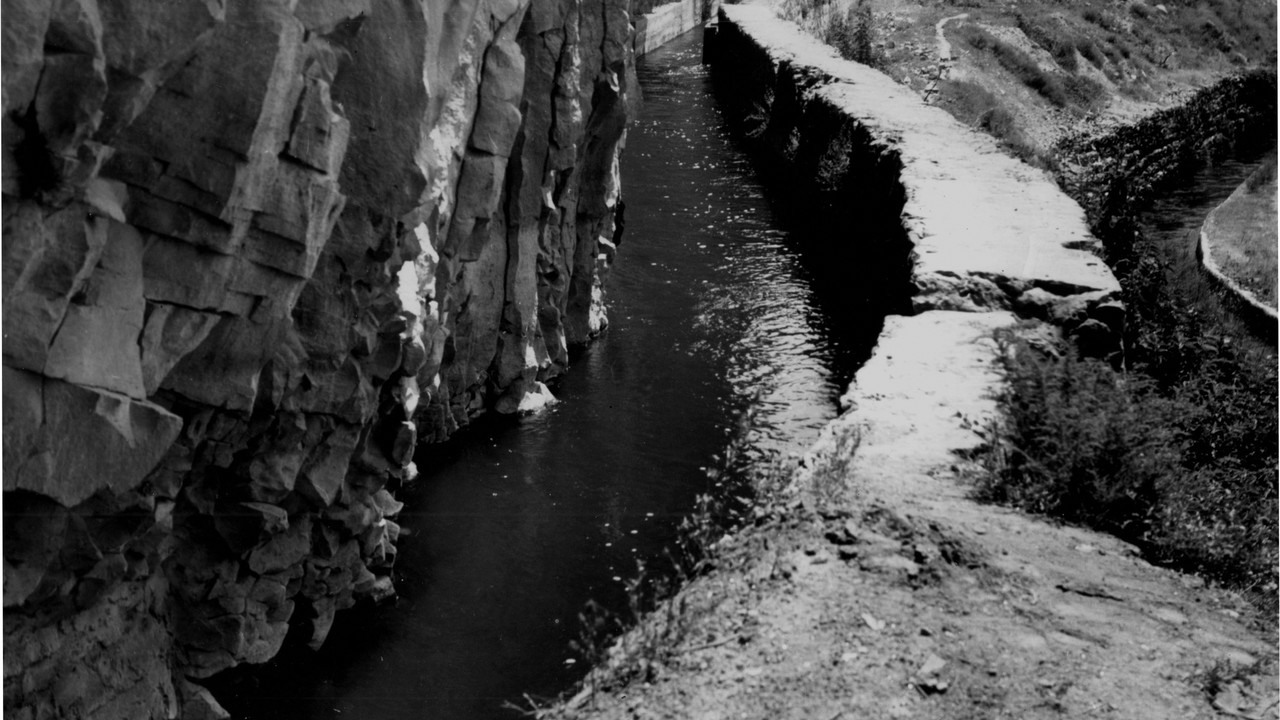
canal originates near Yerevan Lake from the right bank of the Hrazdan River. In
the gorge section, one bank is bordered by natural basalt cliffs, while the
other is reinforced by an artificial embankment later replaced with a stone
wall. Upon reaching the fortress of Teishebaini (Karmir Blur) Fortress, the
canal enters a rock-cut tunnel and emerges on the opposite side of a ridge
about 15 m high. From there, irrigating the lands, it reaches Zvartnots and
Vagharshapat.
The
tunnel is 78 m long, with a discharge capacity of 4.3 m³/s, and the total canal
length is 23.6 km. In the 1930s, the outlet section was extended with a stone
retaining wall to prevent bank collapse.
The
canal has been renovated many times. The first restoration took place in the
late 17th century, when the Mother See of Holy Etchmiadzin acquired the canal.
It was also restored in 1815 during the rule of the last Persian governor of
Yerevan, Hossein Qoli Khan. Attempts were made in 1912–1913, but only in
1920–1923 was it fully restored. In the early Soviet period, retaining walls
and water-control structures were built, some sections were lined, and the bed
was reinforced. Lining works continued until the 1970s. At the beginning of the
19th century, the canal irrigated 625 hectares of land, and in the 1960s about
four times more.
In
1968, a basalt memorial dedicated to the Umeshini canal was erected on Admiral
Isakov Avenue, designed by architect Gevorg Musheghyan (state index: 1.7.7.1).
The front face of the rectangular stone slab bears an inscription, while the
other side shows a map of the surrounding area.
The
Umeshini canal is an integral part of the Karmir Blur archaeological complex.
Its tunnel is a unique hydraulic structure, demonstrating the high level of
water engineering development in the Kingdom of Van.